


Echoes in Huizhou Courtyard: A Meeting of a Small City in Southern Anhui and a Thousand-Year Civilization
In the global tourism landscape, a group of "treasure towns" hidden in the mountainous areas of southern Anhui, China, are quietly becoming cultural bridges connecting tradition and modernity, East and West. Ancient villages represented by Hongcun, Xidi, and Chengkan in Huizhou have attracted in-depth travelers from around the world with their well-preserved Ming and Qing architectural complexes, unique water system wisdom, and profound Confucian cultural heritage. These are not mere tourist destinations but living open-air museums—allowing international visitors to step into a three-dimensional history of China's local civilization and feel the breath and pulse of Eastern rural society between the bluestone paths and horse-head walls.
I. Origin and Development: The Rural Paradigm Created by Water Systems, Clans, and Huizhou Merchants
The legend of this small southern Anhui town originated from two intertwined historical threads: the southward migration of Central Plains aristocrats and the rise of Huizhou merchants. Since the Tang and Song dynasties, prominent clans from the Central Plains sought refuge in secluded valleys at Huangshan Mountain's foot to escape warfare, introducing Confucian rituals and geomantic wisdom to this land characterized by "eight parts mountains, half water, and one-third farmland." By the Ming and Qing periods, Huizhou merchants who adhered to the principle that "no town is complete without Huizhou merchants" channeled their vast wealth back to their homeland, driving the construction of Huizhou villages to their zenith. Take Hongcun as an example: during the Yongle era of the Ming Dynasty, the Wang family ingeniously created a village-wide "ox-shaped water system" —from the "ox intestine" irrigation channels to the "ox stomach" moon-shaped ponds, and finally to the "ox belly" South Lake. This sophisticated water network not only addressed fire prevention, drinking water, and laundry needs but also imbued the village with spiritual vitality through its flowing rhythms. International visitors often marvel at this harmonious coexistence between humans and nature: water flowing past homes serves dual purposes of cleaning and regulating microclimates. The poetic imagery of "washing and drawing water need not hinder distant streams, as every household has clear channels" vividly demonstrates the Huizhou ancestors' practical application of feng shui principles.
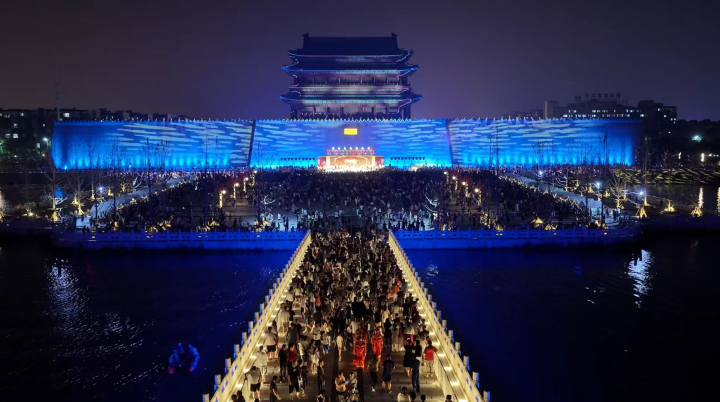
The spatial layout of these villages is itself a frozen clan history. The towering horse-head walls serve not only as fire barriers but also as symbols of family power and wealth; the solemn ancestral halls occupy the village core, establishing the supreme status of bloodline ethics through architectural language; while exquisite wood carvings, brick carvings, and stone carvings engrave stories from "Twenty-Four Filial Exemplars," tales of fishing, woodcutting, farming, and reading, as well as opera anecdotes between beams and gateways, becoming visual textbooks that daily embody Confucian values. For Western travelers accustomed to understanding civilization through architecture, Huizhou villages provide a complete social organization model—they are closer to the folk than the Forbidden City and more rustic and pragmatic than Jiangnan gardens, showcasing the grassroots logic of China's traditional society where clans lived together.
II. Overseas Dissemination: From the Screen of "Crouching Tiger, Hidden Dragon" to UNESCO's List
The international recognition of the small town in southern Anhui began with cultural breakthroughs at the end of the 20th century. In 1986, American scholar and Harvard University professor Ronald G. Knapp systematically introduced Huizhou-style architecture to Western academia for the first time in his book "Ancient Dwellings of China," describing it as "the most exquisite surviving legacy of Chinese folk architecture." However, it was the 2000 film "Crouching Tiger, Hidden Dragon" directed by Ang Lee that truly brought Huizhou villages into the public eye. When Li Mu-bai and Yu Jiao-long chased each other across the stone arch bridge on Hongcun's South Lake and stood facing each other by the still waters of Moon Pond, global audiences were stunned by an extreme sense of Eastern aesthetics through the screen—the white walls and black tiles reflected in the water, the architectural contours resembling Huizhou ink painting harmonizing perfectly with the ethereal world of martial arts. Subsequently, Hongcun and Xidi were collectively listed as "Ancient Villages of Southern Anhui" on the UNESCO World Heritage List, with the evaluation particularly emphasizing their "outstanding examples in human settlement planning and landscape design."
Entering the era of social media, the communication channels of the small town of Huizhou have become more diverse. On Instagram and YouTube, the "Hongcun in the Rain" series photographed by Japanese photographer Kentaro Kobayashi has garnered millions of views. He described "the sound of rainwater dripping from eaves into the irrigation channels as if it were a millennium-old guqin melody." A journalist from France's Le Monde referred to Chengkan as the "Chinese version of Assisi," noting that the integration of religious architecture and secular life rivals that of medieval Italian towns. Notably, these communications did not deliberately cater to Western aesthetics but naturally resonated internationally due to their high cultural distinctiveness—whether it's the unique geometric aesthetics of Huizhou-style architecture or the ecological wisdom of villages coexisting with water systems, both transcend cultural barriers and become shared cultural heritage of humanity.
III. International Impact: Cultural Dialogue, Academic Research, and the Eastern Model of Sustainable Tourism
In the realm of international culture, the small southern Anhui town is transitioning from a "spectated landscape" to an "active participant in cultural dialogue." Every autumn, the "Huizhou Culture and International Rural Heritage Conservation Forum," jointly organized by UNESCO and the Huangshan Municipal Government, takes place in Xidi. Heritage conservation experts from Italy, Japan, and Mexico gather here to exchange insights on revitalizing traditional villages. Italian scholar Maria Teresa Guaitoli once remarked, "The water management wisdom of Hongcun offers unexpected lessons for Venice's response to rising sea levels." Such cross-regional civilizational dialogues have brought Huizhou's experience into the global discourse on heritage conservation.
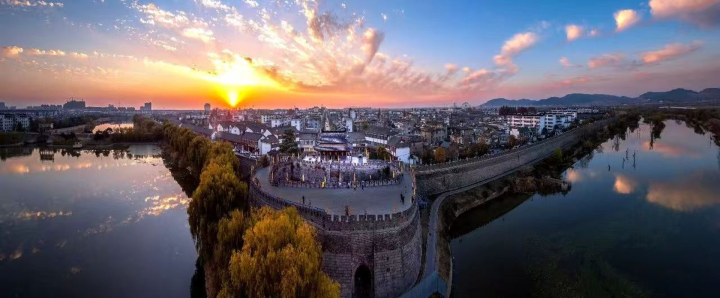
From an academic perspective, Huizhou villages have become a pivotal research field in international sinology. Prestigious institutions including Stanford University (USA), the University of Cambridge (UK), and Heidelberg University (Germany) have established long-term field research bases in Hongcun, exploring dimensions such as clan-based social structures, folk beliefs, and traditional craftsmanship. In recent years, an increasing number of international students have chosen Huizhou for their "gap year" studies—staying in renovated century-old residences as homestays while learning traditional techniques like Huizhou ink production, bamboo carving, and Huizhou opera singing from local intangible cultural heritage inheritors. This immersive cultural experience offers deeper insights into Huizhou's cultural essence compared to superficial sightseeing. As one Australian architecture graduate student remarked: "When mapping the beam structure at Luodongshu Temple in Chengkan, I truly understood how' ritual propriety' shapes social dynamics through spatial design."
In the realm of sustainable tourism, Huizhou Xiaocheng has demonstrated unique leadership value. Distinct from over-commercialized ancient town models, the region implements a strategy of "preservation-driven utilization and living heritage transmission": traditional dwellings remain in villagers' possession with government-funded restoration subsidies, encouraging indigenous communities to maintain original lifestyles. Concurrently, internationally recognized heritage impact assessment mechanisms are adopted to strictly regulate building height and architectural style. This balanced approach to conservation and development has been recognized as a model case by international tourism organizations. For European and American travelers pursuing "responsible travel," attending a lecture on traditional Chinese culture at Nanhu Academy in Hongcun Village or participating in rural revitalization volunteer programs in Bishan Village has become a more meaningful travel experience than simply visiting tourist attractions.
IV. Challenges and the Future: Finding Sustainable Paths Between Conservation and Opening Up
However, the path to internationalization for this small southern Anhui town has been far from smooth. With tourist numbers skyrocketing, the conflict between preservation and development has grown increasingly acute. Multiple World Heritage Site Monitoring Reports have highlighted that some villages now exceed their daily carrying capacity, leading to issues like deterioration of ancient architectural components and water eutrophication. A more insidious challenge lies in cultural hollowing out—when younger generations migrate to cities, traditional customs, dialects, and handicrafts risk disappearing. An elderly man surnamed Wang, who has lived in Hongcun for six decades, once told The Guardian: "Tourists love snapping photos of my laundry at Moon Pond, but they don't realize the water there isn't drinkable like it was when I was a child."
Meanwhile, cultural distortion caused by excessive commercialization continues to undermine international tourists' experiences. Many streets are overrun with cookie-cutter souvenir shops, while traditional bamboo weaving workshops and tofu factories have been replaced by foreign businesses. Some homestays have altered the interiors of historic houses into Western-style interiors, damaging the architectural heritage
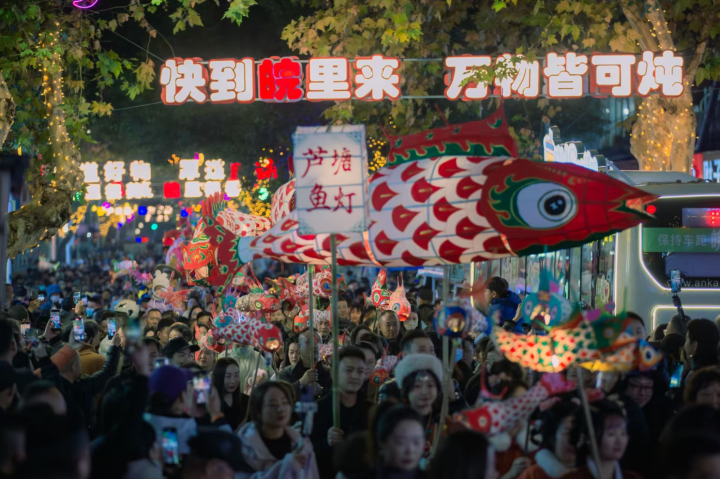
Looking ahead, the internationalization of this small southern Anhui city requires more refined strategies. On one hand, it could adopt Italy's "Slow City" concept by implementing reservation systems and differentiated pricing to regulate tourist flows, redirecting overcrowded core areas to surrounding "hidden gem villages" —communities like Guanlu, Nanping, and Pingshan that preserve intact Huizhou architectural heritage while maintaining untouched tranquility. On the other hand, digital technologies offer new possibilities for cultural dissemination. The 2023-launched "Cloud Tour of Huizhou" project utilizes high-precision 3D scanning and virtual reality to digitize fragile spaces like Xidi's Jing 'ai Hall and Hongcun's Chengzhi Hall, which are difficult to fully open to the public. This enables global scholars and enthusiasts to study the intricate details of "Huizhou Three Carvings" up close. For international tourists, this model combining "online in-depth tours with offline immersive experiences" perfectly aligns with post-pandemic expectations for cultural travel quality.
When the sunset's afterglow bathed the painted bridge over South Lake in Hongcun, a traveler from Spain sat down by the water channel and played a local folk song "Little Peach Red" on an ancient guitar he carried with him. The thousand-year-old streams of Huizhou resonated with the melody of flamenco for the first time. At this moment, the small town in southern Anhui was no longer just a historical fossil but became a vibrant arena for cultural dialogue. They proved to the world that the "treasures" hidden deep in the mountains are valued not for their closed perfection but for their open resilience—just as the courtyard of an old Huizhou residence, which collects rainwater and gazes at the stars, encompasses the interaction between heaven and earth and human hearts within its compact space. For international tourists eager to understand China, stepping into such a small town is like entering the most subtle and authentic pulse of civilization.

