

In Yangzhou, the authentic, bustling spirit of early morning life begins with a steaming basket of *Kuilongzhu* tea and a couple of exquisite pastries at the Fuchun Teahouse. This is no mere ordinary breakfast; rather, it is a ritual—one officially inscribed on the National List of Intangible Cultural Heritage as the "Fuchun Tea Pastry Craftsmanship." In the most gentle manner, right there upon the tabletop, it perpetuates the thousand-year-old culinary lineage of the Huaiyang tradition: a philosophy that dictates, "food must be refined to the utmost, and ingredients prepared with the finest precision."
I. *Kuilongzhu*: A Single Pot Brews the Essence of Three Rivers
The very soul of Fuchun’s tea pastries begins with a single cup of *Kuilongzhu*. This is not a single variety of tea, but rather a unique art of blending pioneered by Fuchun: it combines the mellow richness of Anhui’s *Kuizhen* tea, the elegant clarity of Zhejiang’s *Longjing*, and the fragrant bouquet of Yangzhou’s *Zhulan* (Pearl Orchid) tea, blended together according to a secret, proprietary formula. When brewed with a pot of hot water, it harmonizes the flavor of *Longjing*, the color of *Kuizhen*, and the aroma of *Zhulan* into a single entity. The resulting liquor is crystal-clear and its fragrance deeply invigorating—earning it the reputation of being "a single pot that brews the tea of three provinces." This cup of tea first cleanses the palate and calms the mind, laying a refined and elegant prelude for the feast of pastries that is soon to follow.
II. *Sandingbao* (Three-Diced Bun): Poetry on the Palate
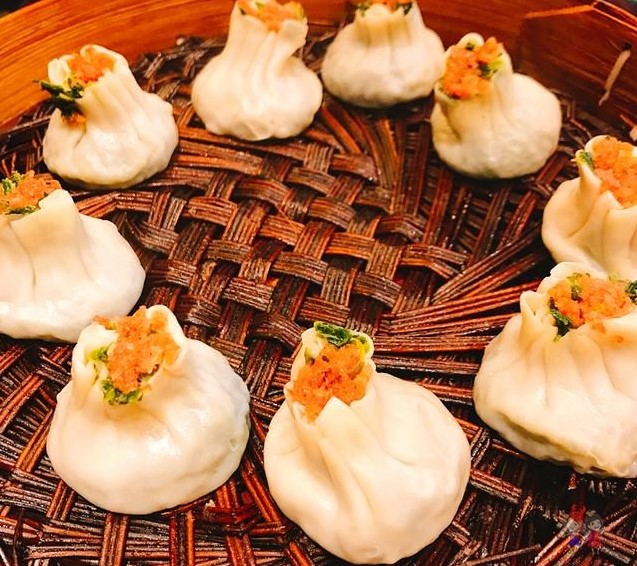
If the tea serves as the overture, then the *Sandingbao* is the magnificent centerpiece. Hailed as a "peerless delicacy under the heavens," the true mastery of its intangible cultural heritage craftsmanship lies entirely in the concept of *fencun*—precise, perfect proportion. The filling consists of three distinct ingredients: diced meat from a mature hen (aged for optimal flavor), diced pork belly—specifically the "three-layered" cut from the ribs—and diced fresh bamboo shoots harvested in season. These are cut into uniform small cubes and blended according to a "golden ratio" of 1:2:1. The chicken contributes freshness, the pork provides richness, while the bamboo shoots offer a crisp tenderness that also serves to cut through the richness of the meat; the entire filling is then further enhanced with the roe of freshwater shrimp and a specially slow-simmered chicken stock. The bun’s dough is fermented to a state of perfect, airy softness; it is then pleated and sealed with exactly 32 folds, taking on a shape reminiscent of a water chestnut. With a single bite, five sensations—freshness, fragrance, crispness, tenderness, and smoothness—meld together on the tongue. It offers a flavor that is savory yet subtly sweet, rich yet never greasy—encapsulating the very essence of the Huaiyang culinary philosophy—"fresh, crisp, tender, and refreshing"—within the compass of a single, palm-sized bun. **III. *Qianceng Yougao* (Thousand-Layer Oil Cake): The "Test of Skill" Within the Pastry**
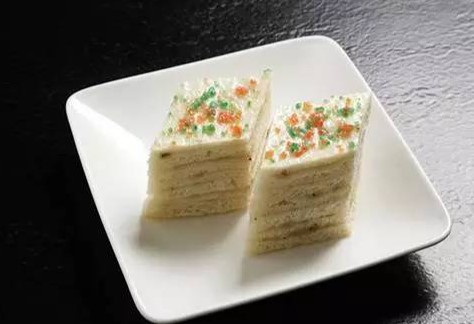
Standing in delightful contrast to the rich indulgence of the *Sanding Bao* (Three-Diced Filling Bun) is the understated elegance of the *Qianceng Yougao* (Thousand-Layer Oil Cake). This seemingly simple dessert is, in reality, the ultimate test of a pastry chef's mastery of dough. Its core intangible cultural heritage value lies in the technique of "layering"—the leavened dough must be repeatedly rolled out thin, evenly sprinkled with diced candied pork fat and fine granulated sugar, and then folded over. This process is repeated—back and forth—to create as many as 64 distinct layers. Once steamed, the cake takes on a translucent quality; the layers, thin as a cicada's wing yet clearly distinguishable, possess an exceptional resilience and offer a sweetness that is perfectly balanced. It resembles less a mere pastry and more a meticulously carved sculpture of white jade, showcasing the quiet mastery of a pastry chef who "uses dough as paper and sugar and oil as paint."
**IV. Heritage: More Than Just a Craft**
The intangible cultural heritage value of the "Fuchun Tea Pastry Making Techniques" extends far beyond the food itself. It represents a complete, living cultural system of daily life:
• **Tea and Pastry in Unity:** It pioneered a unique "one tea, one pastry" or "one tea, multiple pastries" morning tea model, seamlessly blending the art of tea drinking with the pleasure of savoring pastries.
• **Eating with the Seasons:** Different pastries are introduced as the seasons change—such as shepherd's purse buns in the spring or crab roe soup buns in the autumn—in harmony with the natural rhythms of the year.
• **Heart-to-Heart Apprenticeship:** From the nurturing of the natural leaven (*mianfei*) and the seasoning of the fillings to the precise pressure applied during wrapping, the craft is passed down entirely through oral instruction and personal guidance from master to apprentice. Hidden within every fold and crease is a tactile sensibility and wealth of experience that no machine could ever replicate.
**V. In the Modern Era: The Flavor of Slowness**
In an age that relentlessly pursues efficiency, the philosophy of "slow work yields fine results"—embodied by Fuchun tea pastries—might seem somewhat "anachronistic." Yet, it is precisely this "slowness" that allows it to serve as a culinary bastion against the tide of fast-food culture. Every diner who takes a seat at Fuchun automatically enters a state of "Yangzhou Time"—brewing tea, waiting patiently, savoring each bite, and engaging in leisurely conversation—allowing their taste buds ample time to fully experience the unfolding layers of flavor. Today, Fuchun Tea House’s dim sum serves not merely as a signature emblem of Yangzhou, but as a window through which the world may glimpse the refined aesthetics of Chinese living. It reminds us that the most exquisite pleasures are often found hidden within the simplicity of an ordinary morning—amidst the rising steam from a bamboo steamer, a cup of clear tea, and the company of a few kindred spirits. This craft, now inscribed on the list of Intangible Cultural Heritage, safeguards far more than just a flavor; it preserves a way of life characterized by unhurried grace and refined elegance—that sense of unhurried leisure and quiet assurance, deeply ingrained in the very bloodstream of the people of Yangzhou, encapsulated in their cherished morning ritual of "starting the day with water."