


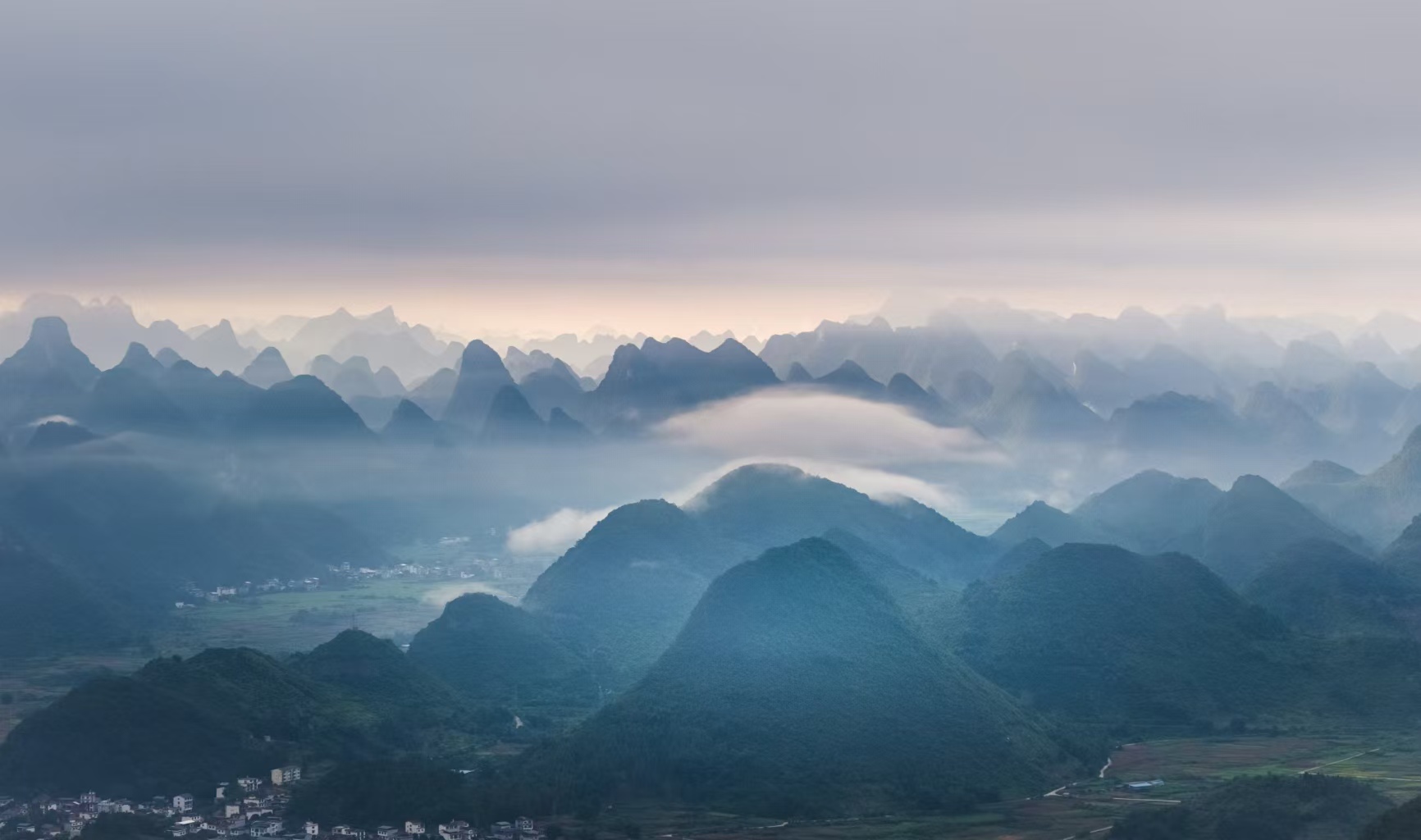
Saying that "Yangshuo is the real-life version of A Panorama of Rivers and Mountains" is far more than a simple metaphor—it is an aesthetic echo spanning nearly a thousand years. Wang Ximeng, a young artist of the Song Dynasty, used mineral pigments to paint a majestic landscape of blue-green mountains and rivers, almost as if he had prophetically captured the very essence and spirit of Yangshuo. This description is not a reference to any single popular photo spot, but rather the highest praise for the natural beauty of the entire Yangshuo region.
Mountains as the Backbone: What is "Yangshuo's A Panorama of Rivers and Mountains"?
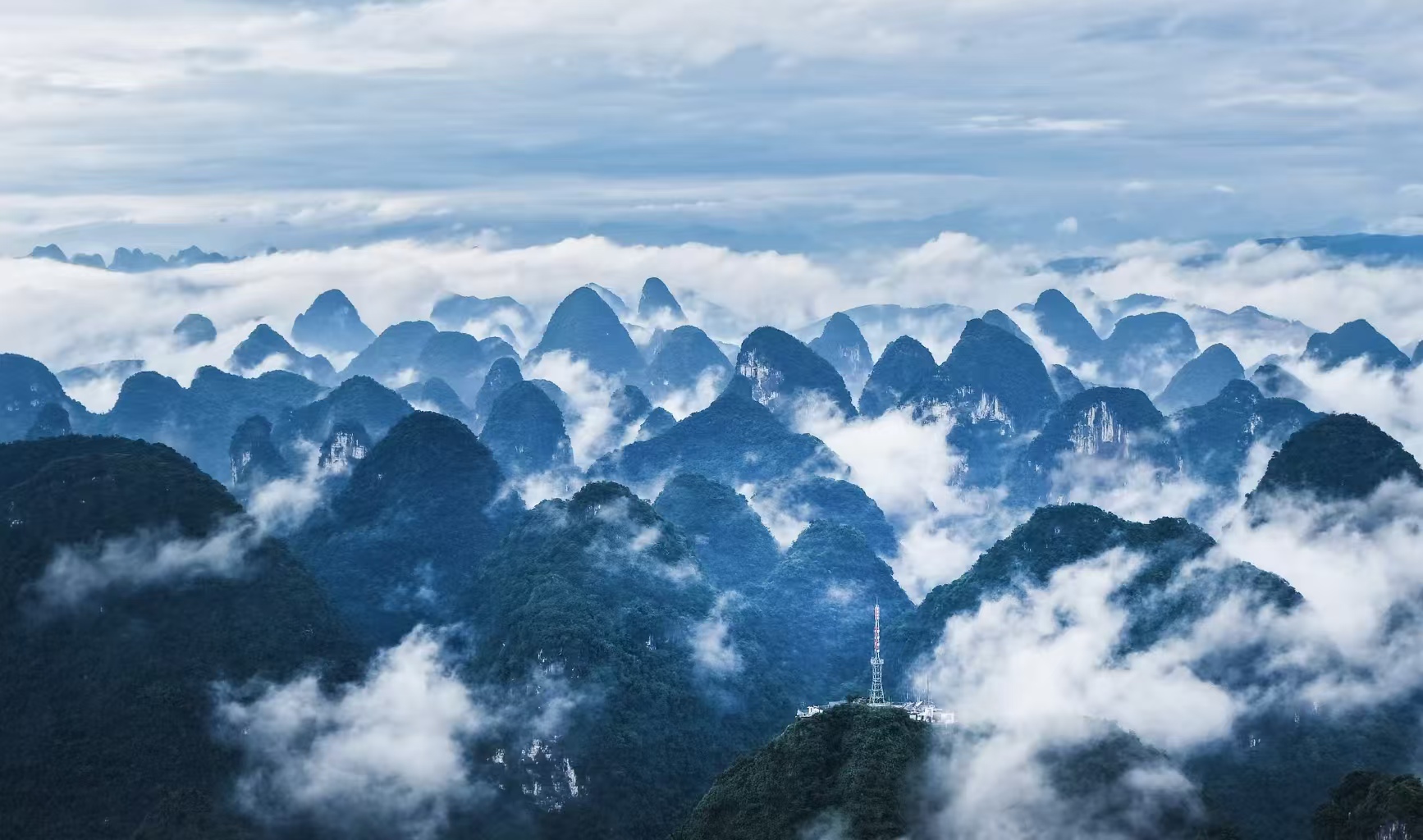
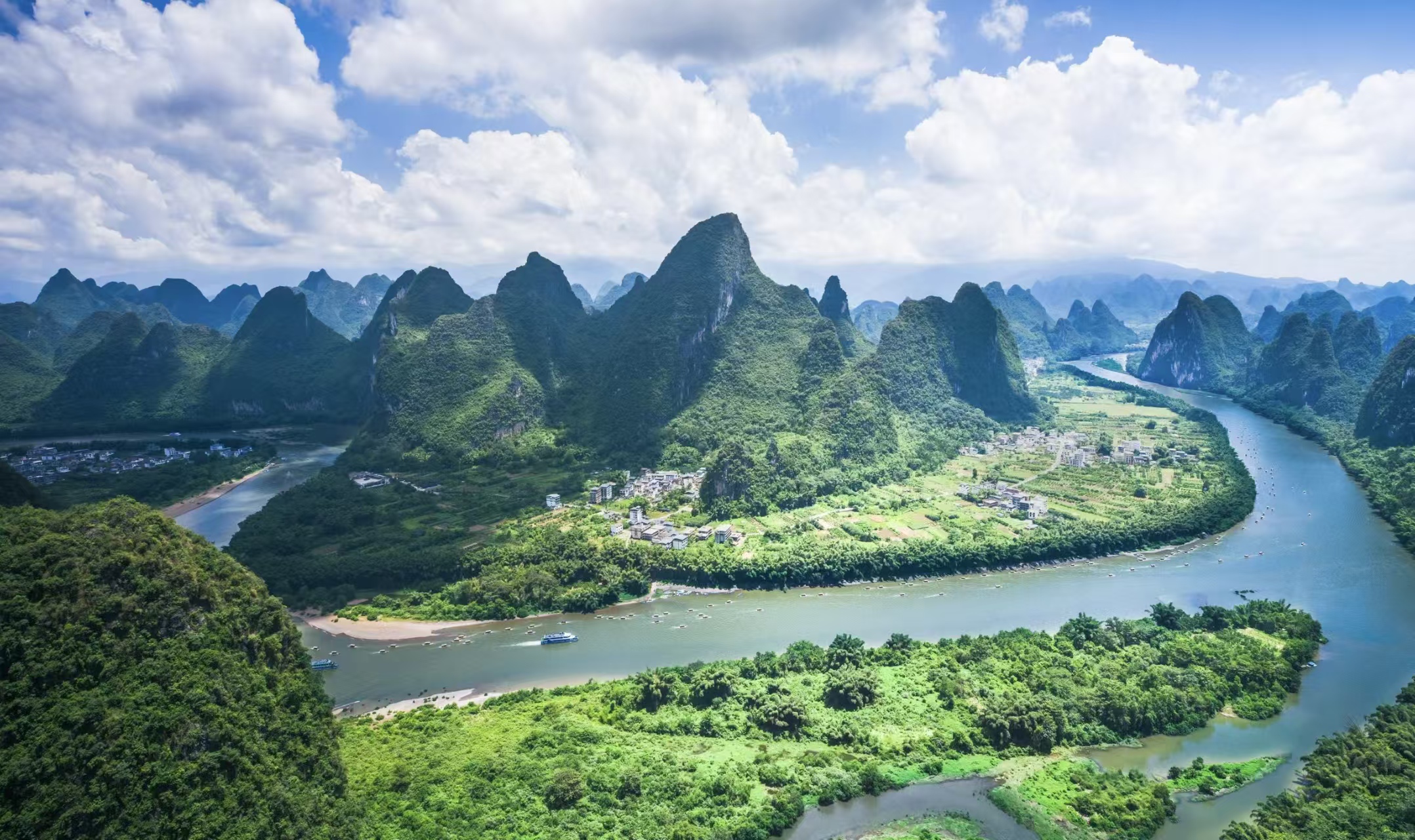
The imagery of "a thousand miles of rivers and mountains" has long taken root in the hearts of local Yangshuo people. As early as the Song Dynasty, the poet Wang Zhengong wrote the famous lines, "Guilin's landscape is the finest under heaven, its jade-green peaks and silvery rivers are a scene of profound beauty." That profound beauty has quietly materialized over a millennium. Here, the rolling green hills are like an unrolled silk scroll, the winding Li River is like shifting ink tones, and the play of light at dawn and dusk resembles drops of azurite and malachite, together forming a living, flowing Chinese landscape painting that is uniquely breathtaking.
Seven "Visual Highlights": How to Appreciate This Living Painting from Multiple Perspectives?
"Yangshuo's A Panorama" is not a static scene. Instead, against the backdrop of karst peaks, seven distinctive "visual highlights" come to life. Whether you climb to a high vantage point to take in the grandeur or stroll quietly through the countryside, you can truly read this living landscape.
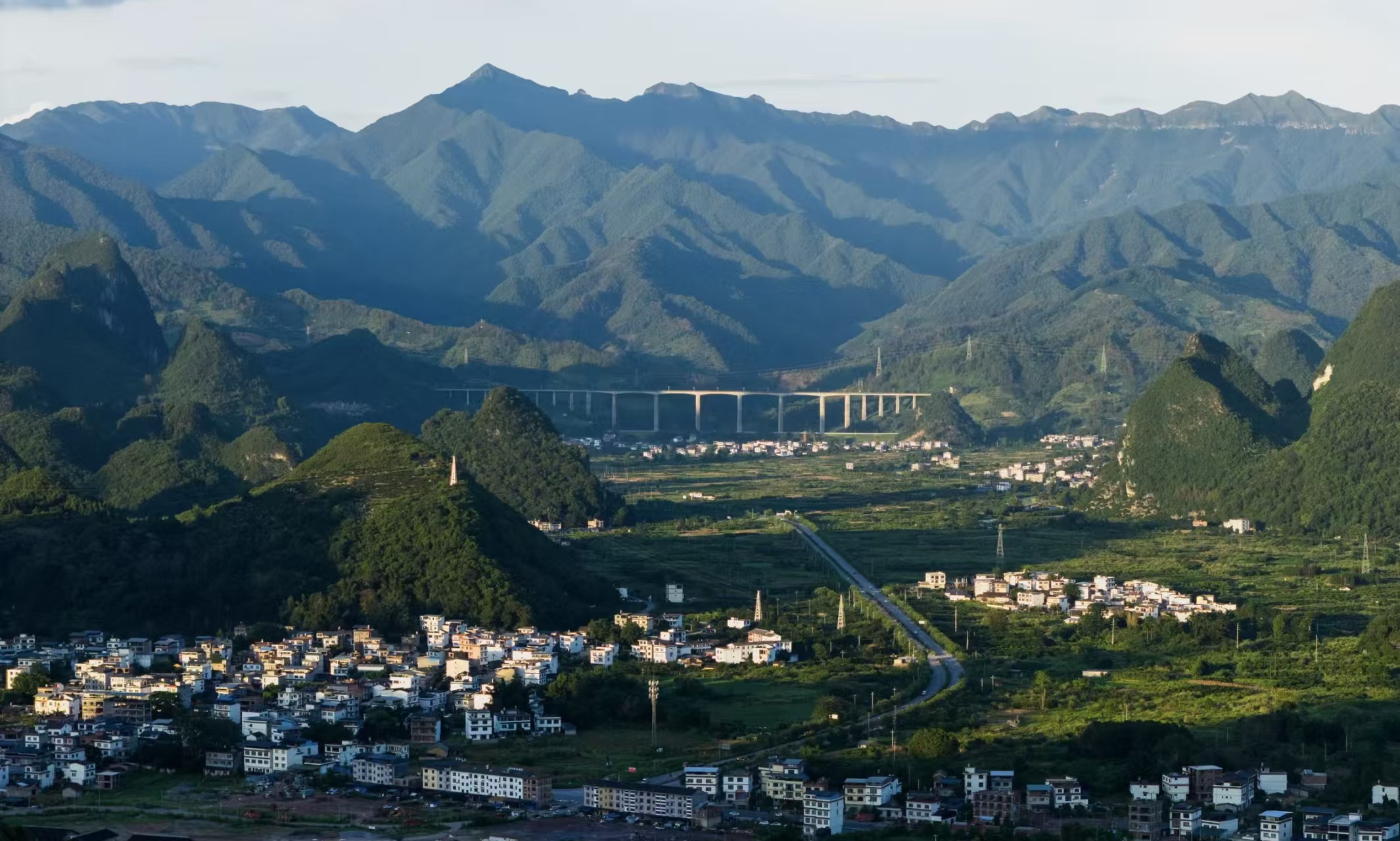
· Xiyang Mountain / Mianqian Mountain (Sunset Hill / Front Hill): Located near Yangmeiling Village in Puta Town, this is the prime C-spot for sunset viewing. As the sun sets, the layered peaks are bathed in a golden glow, offering a perfect lesson in the flowing contrasts of light and shadow.
· Xianggong Hill (Lord's Hill): Known as the "best viewing platform for the Li River," the classic U-shaped river bend provides an unrivaled vantage for capturing mirror-like reflections and magnificent sea of clouds.
· ChaoTian Ridge in Fuli Ancient Town: The wide, flat rocks at the summit offer an immensely stunning, open view of galloping peaks—ideal for photographing the majestic surge of the mountains.
· Dahebei Village: A quaint riverside village along the Li River that serves as the very "eye" of the scroll. Here, close to the river, fishing boats with cormorants drift by, while in the distance, black-tiled roofs and white horse-head walls reveal a serene, lived-in charm.
· Xingping Section of the Li River: Drift on a bamboo raft across the jade-green waters. As reflections of the peaks shimmer on both sides, surrounded by lush green hills, you will truly understand the feeling of "touring within a painting."
· Mural Hill (Nine-Horse Mural Cliff): A sheer riverside cliff face that looks like a colorful painted screen. Local folklore says, "spot seven horses and you'll pass the imperial exam; spot nine and you'll become the top scholar."
· Li River Hike (Yangdi – Xingping): A classic golden-section hiking route of about 18 kilometers. Along the way, you'll encounter the ancient village of Langshi (with 24 well-preserved Ming and Qing dynasty residences) and living cultural practices such as cormorant fishing.
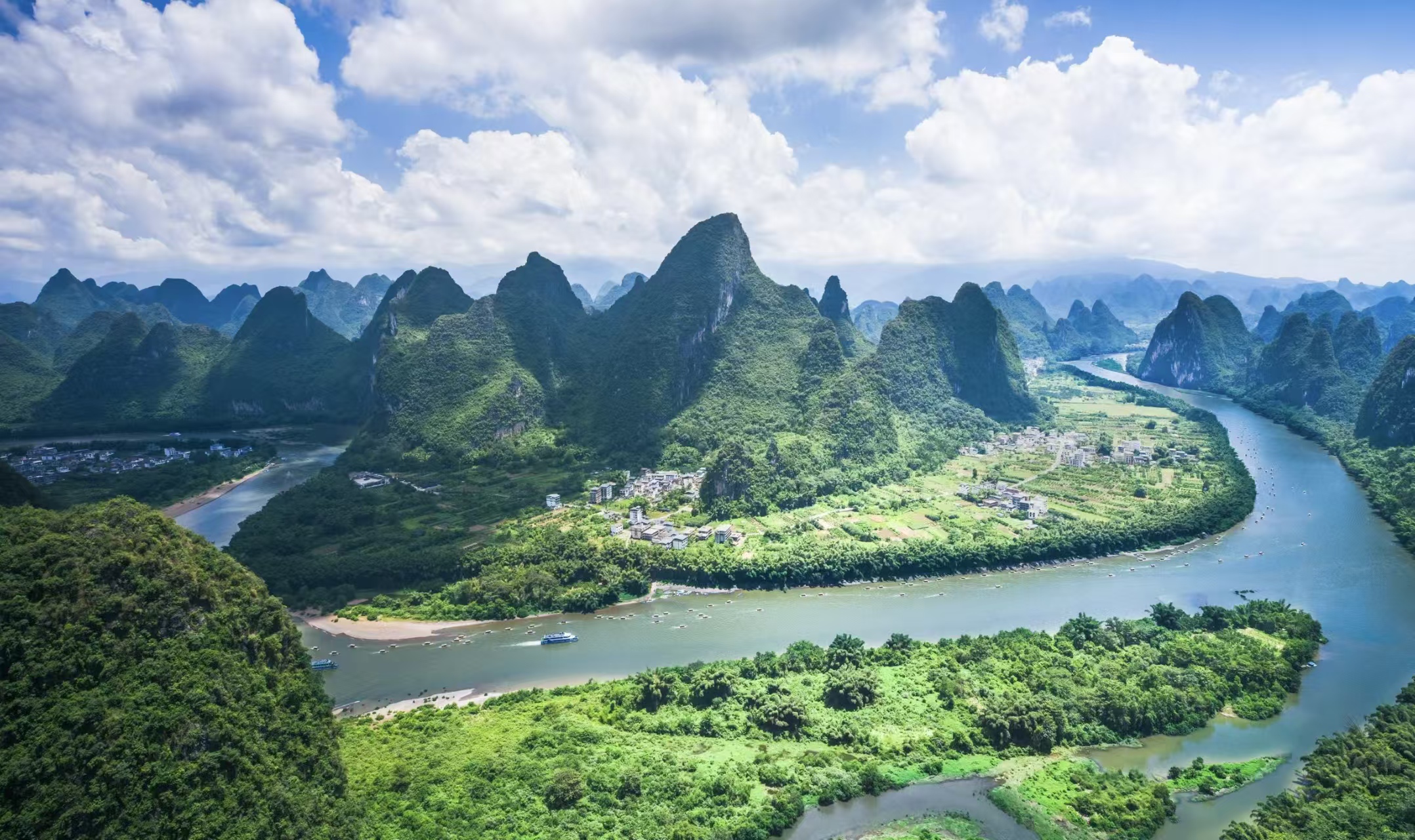
The next time a friend asks about Yangshuo's Panorama of Rivers and Mountains, you can confidently say: It is not located on a single mountain or along a single river. Instead, it hides in every wisp of morning mist, every sunset glow, every peaceful village, and every lush green peak across Yangshuo. This flowing scroll of living landscape awaits your own journey of discovery.

