


The Pantheon in the Desert: The Mogao Caves, a Scene of Civilizational Dialogue Spanning a Thousand Years
On the vast Gobi Desert at the western end of the Hexi Corridor in Gansu, the cliff face at the eastern foot of Mingsha Mountain serves as a natural barrier, isolating it from windblown sand and worldly distractions. Along the 1,680-meter-long cliff surface, hundreds of caves are arranged in layers, resembling a honeycomb with exquisite symmetry. This is the Mogao Caves of Dunhuang, hailed as the "Palace of Art in the Desert" and the "Oriental Louvre." Since a monk named Yue Zun carved the first stone wall here in 366 AD, over a millennium of construction has unfolded, spanning more than sixteen centuries to date. With 735 caves, 45,000 square meters of murals, and 2,415 painted sculptures, the site stands as one of the world's largest and most content-rich Buddhist art sanctuaries. For international travelers eager to delve into Eastern civilization, the Mogao Caves are not merely a museum but also a time tunnel—where one can witness firsthand how the four great civilizations of China, ancient India, ancient Greece, and ancient Persia collided, merged along the Silk Road, and crystallized into eternity.
Origin and Development: The Golden Radiance of a Monk and a Thousand Years of Construction
The story of the Mogao Caves begins in a moment steeped in religious imagination. In the second year of the Jianyuan era of the Former Qin Dynasty (366 AD), a monk named Yue Zun climbed Sanwei Mountain at dawn. When he gazed up at the cliff face of the opposite Mingsha Mountain, it seemed as if myriad rays of golden light enveloped the cliff, resembling the manifestation of a thousand Buddhas. Deeply moved, the wandering monk resolved to cease his travels and immediately commissioned the carving of the first spiritual retreat into the cliff—thus giving birth to the Mogao Caves.
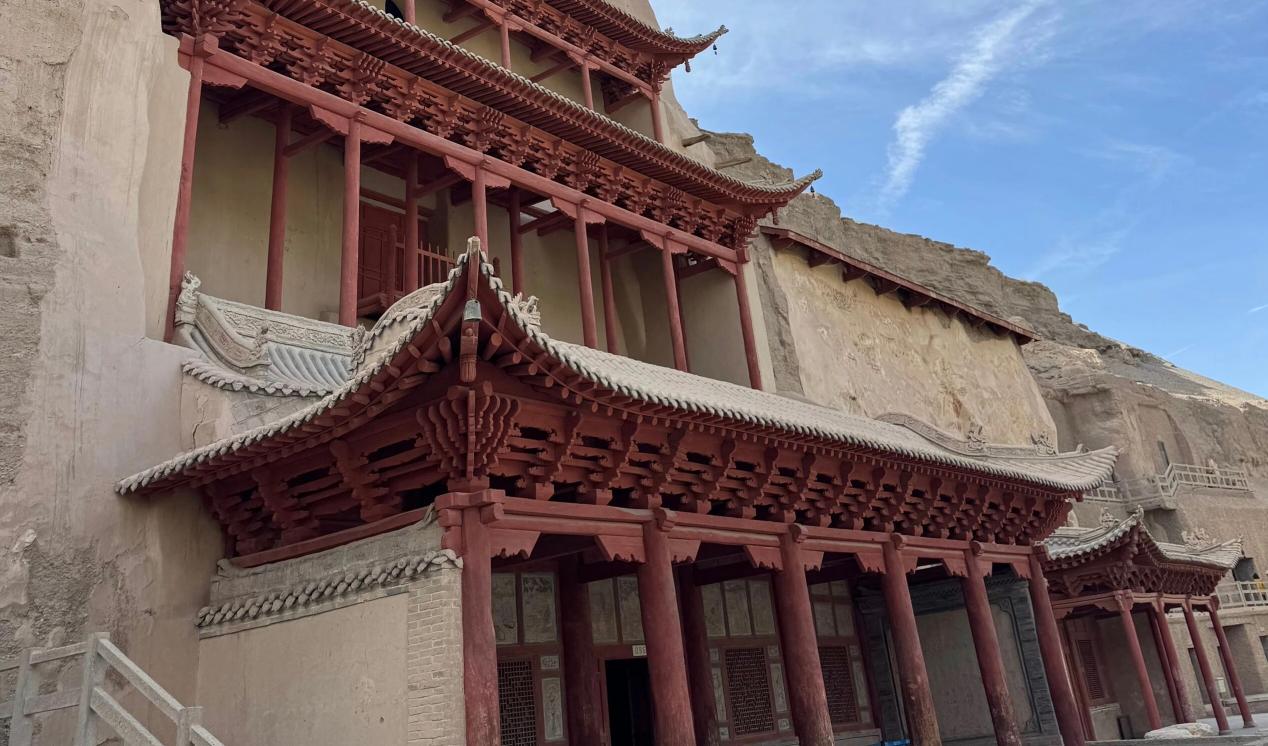
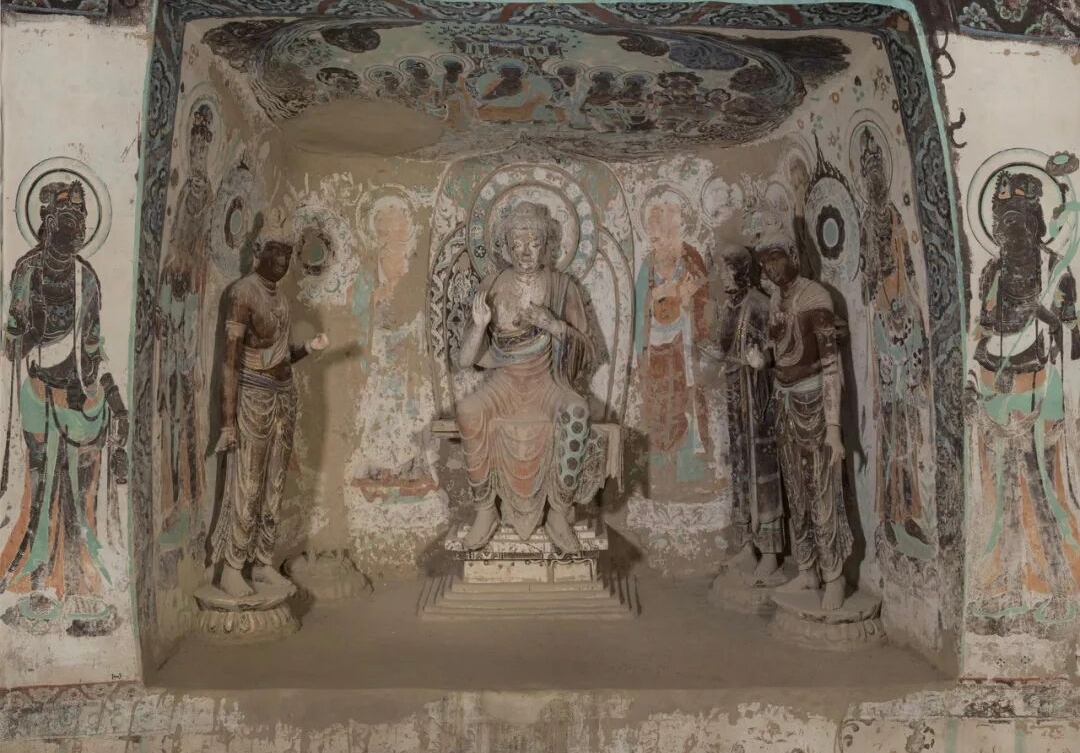
According to the "Record of the Mogao Caves" inscribed on the north wall of the antechamber of Cave 156, after Le Zun, the Zen master Fa Liang carved another niche beside his original one. The successive construction efforts by these two eminent monks attracted an increasing number of pilgrims, and the scale of the site gradually expanded. During the Northern Liang period, the Mogao Caves witnessed their first major cave-building boom. Caves 268,272, and 275, known as the "Three Northern Liang Caves," preserve extensive examples of Western Regions artistic style, with murals predominantly depicting Jataka tales that embody the Buddhist spirit of patience and sacrifice. Subsequently, the arrival of imperial artisans from the Northern Wei court introduced the artistic style of the Yungang Grottoes to Dunhuang. Caves such as Cave 285 seamlessly blend Taoist deities, Hindu elements, and Buddhist themes, representing the pinnacle of Northern Dynasties art.
During the Sui and Tang dynasties, the Mogao Caves reached their zenith. Amid national unification and unprecedented prosperity in East-West trade, the number of excavated caves surged dramatically, with the artistic quality of murals and polychrome sculptures reaching unparalleled heights. In Caves 45 and 112 from the High Tang period, the flying apsaras depicted in the murals hold pipas, their robes fluttering in the wind; their graceful movements of playing the instrument capture a glorious moment from imperial court music and dance a millennium ago. Throughout the Five Dynasties, Western Xia, and Yuan periods, although construction at the Mogao Caves gradually slowed, it never ceased entirely. Thereafter, the site lay dormant in the desert, nearly forgotten by the world, until a profound announcement in 1900 sent shockwaves across the globe.
Suffering and Glory: The Discovery of the Scripture Cave and the Loss of Cultural Relics
On June 22,1900, Taoist priest Wang Yuanlu accidentally knocked open a door on the north wall of the passage while clearing accumulated sand in Cave 16—the "Scripture Cave" (now designated as Cave 17), which had been sealed for nearly a millennium. The cave was filled with various manuscripts, silk paintings, and ritual artifacts dating from the 4th to the 11th centuries AD, totaling approximately 50,000 items.
However, the opening of this door did not usher in a feast of civilization, but rather revealed a poignant history of cultural dispersion. In 1907, the British-Hungarian Aurel Stein arrived first, acquiring 24 boxes of manuscripts and five boxes of painted silk textiles from Taoist monk Wang at an extremely low price. The following year, the French sinologist Paul Pelliot arrived. His command of Chinese enabled him to select over 6,000 scrolls of immense scholarly value, including manuscripts in linguistically significant languages such as Sanskrit, Uighur, and Sogdian, which were subsequently transported to Paris. Subsequently, the Japanese Ohtani Expedition and the Russian Odomburg Expedition followed, gradually plundering nearly all the treasures from the Library Cave over a decade. It was precisely these documents scattered across London, Paris, St. Petersburg, and Tokyo that transformed Dunhuang from an abandoned monastic site into a global academic focal point. The eminent historian Chen Yinke lamented: "Dunhuang is the tragic chapter of our nation's academic history!" This very force of dispersion gave rise to a prominent discipline bridging East and West—Dunhuang Studies.
International Impact: From a "Grieting History" to a "New Trend in Global Academia"
In 1925, Japanese scholar Ishibashi Juntaro first used the term "Dunhuang Studies" during a speech in Osaka, marking the official emergence of this discipline—focusing on the art of the Mogao Caves and the manuscripts from the Library Cave—as a prominent field on the international academic stage. Over the following century, scholars from dozens of countries, including Japan, France, the United Kingdom, Russia, and the United States, devoted themselves to the collation and study of the Dunhuang manuscripts, ensuring an uninterrupted academic dialogue between East and West. On December 11,1987, UNESCO officially inscribed the Mogao Caves on the World Heritage List, with the World Heritage Committee's evaluation stating unequivocally: "The Mogao Caves possess unique and global value and must be protected for the benefit of all humanity." Notably, the Mogao Caves were the only project among China's initial World Heritage nomination that met all six criteria for World Cultural Heritage—a truly exemplary site excelling in artistic achievement, cultural exchange, historical testimony, and religious significance.
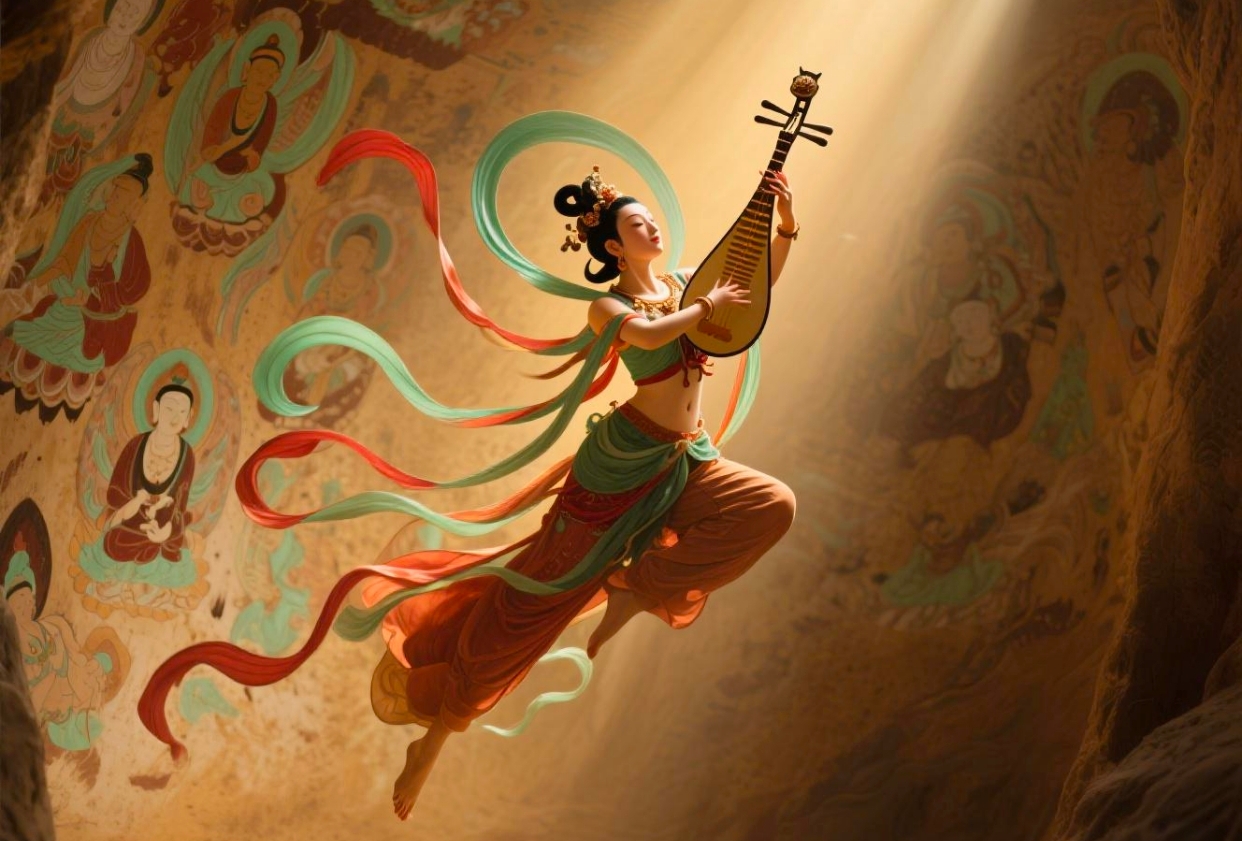
Since the beginning of the 21st century, Dunhuang's international network has continued to expand. The Dunhuang Academy has actively promoted the digital repatriation of cultural relics lost overseas, having reached agreements with countries such as the United Kingdom and France to digitize 8,375 artifacts and obtain over 101,000 high-definition images. By September 2025, the "Dunhuang Culture Global Connection" initiative had successfully reached 16 countries including the United States, Germany, and Japan, allowing audiences across the globe to experience the Mogao Caves firsthand through online academic lectures and digital museum interactions. That same year, the Academy also hosted the "Dunhuang Culture Week" in London, presenting the millennia-old Silk Road civilization to Western youth through digital exhibitions and art workshops. As Shi Hanwen, a specially appointed American researcher at the Dunhuang Academy, noted: "Dunhuang has become a miracle precisely because it embodies true openness and inclusiveness—different cultures converged and intertwined along the Silk Road, rather than conflicting."
At the tourism level, the Mogao Grottoes also exhibit remarkable international appeal. Benefiting from the continuous optimization of China's visa facilitation policies, the Mogao Grottoes welcomed 450,000 international visitors in the first half of 2025, representing a 35% year-on-year increase. During the same year's Cultural Expo, Dunhuang Mogao International Airport received 36.36% more foreign visitors, with cumulative tourism service revenue reaching USD 3.1473 million—a 94.30% year-on-year growth. On the travel itineraries of visitors from the United States, the United Kingdom, Japan, South Korea, and other countries, "visiting the Mogao Grottoes" has evolved from a private treasure for cultural enthusiasts into a golden calling card for the world.
Challenges and the Future: Striving for Balance Between Fragility and Eternity
The greater the value of the Mogao Caves, the more formidable the challenges they face. First is the dual aging caused by both natural and human factors: wind and sand erosion, cliff fissures, and the peeling and efflorescence of the murals continuously threaten this open-air museum. Second is the conflict between the surge in visitor numbers and cultural heritage preservation. In 2024, the Mogao Caves welcomed 3.12 million visitors, setting a historical record. Every breath leaves carbon dioxide and moisture in the caves, accelerating the fading of the murals day by day.
Fortunately, the guardians have never given up in their race against time. The Dunhuang Academy has evolved from early "rescue restoration" to "preventive conservation," establishing a monitoring and early warning platform covering six grotto sites across Gansu Province, achieving an effectiveness rate of 95% in addressing cultural relic deterioration. To address overcrowding, the academy pioneered a new model featuring "total visitor capacity control, online reservations, digital exhibitions, and on-site tours," increasing daily visitor capacity from an initial 3,000 to 6,000. During peak seasons, some visitors watch two digital films instead of touring specific caves, ensuring both safety and fulfillment of cultural needs.
Digitalization stands as the most exciting breakthrough approach. To date, the Dunhuang Academy has completed digital acquisition of murals from 300 caves, with 212 of them achieving 3D reconstruction. Global audiences can simply tap their screens to "step into" Cave 285, bringing the flying apsaras within reach. The "Cloud Appreciation of Dunhuang" digital platform has been launched in 120 countries and regions worldwide, accumulating 800 million views. Meanwhile, the Academy has developed China's first intelligent mobile platform for cultural relic digitization, enabling real-time processing and rapid imaging directly at remote Gobi desert sites. As Su Bomin, Director of the Dunhuang Academy, emphasized, cultural relic digitization represents a pivotal direction in contemporary heritage preservation, allowing the stories of the Silk Road to achieve eternal vitality in the digital realm.
Looking ahead, the Mogao Caves will continue to strike a delicate balance between "protection" and "sharing." The Dunhuang Academy's international cooperation network is steadily expanding, with its cultural heritage conservation technologies applied to over 300 heritage conservation projects worldwide. The 8th Dunhuang Cultural Expo brought together more than a thousand guests from 97 countries and 8 international organizations, marking Dunhuang's transformation from an "academic research subject" into a genuine "global cultural landmark." As UNESCO noted, the Mogao Caves "demonstrate, with remarkable foresight, effective heritage tourism management practices and set a highly significant exemplary model."
As the sunset's afterglow bathed the area between Sanwei Mountain and Mingsha Mountain, the outlines of hundreds of caves on the cliff faces remained strikingly clear in the twilight. Visitors departed from this site equipped with digital devices; they carried away not only images stored on their phones but also a vivid perception of "civilizational convergence." The value of the Mogao Caves lies not in their affiliation with any particular nation or belief system, but rather in their role as an eternal testament to how human civilization flourished through dialogue and inclusiveness even in the most remote and barren corners. At the intersection of digital technology and stone architecture, this millennium-old resonance continues unabated—it still whispers, inviting all who are willing to listen to set aside preconceived frameworks, approach the site with reverence, and personally explore the profound meaning of history and the essence of Eastern aesthetics.

