


The Echoes of the Forbidden City Over Six Centuries: The Imperial Palaces of the Ming and Qing Dynasties, a Long Scroll of World Civilization
When the first rays of morning sunlight pierce through the thin mist and fall upon the golden glazed tiles at the very center of Beijing's central axis, this vast palace complex spanning 720,000 square meters slowly awakens in the dawn light. The ten-meter-high deep-red palace walls serve as a barrier of time, separating over six centuries of imperial history from the modern urban landscape of the 21st century—yet they also bind the two worlds together with a remarkable tension. This is the Ming and Qing Imperial Palace, commonly known as the Forbidden City, the world's largest and best-preserved ancient wooden palace complex. It once served as the residence of twenty-four emperors and the heart of the empire for over four centuries; today, it stands as an indispensable stop on every traveler's itinerary. For any international visitor eager to understand Eastern civilization, stepping into these grand palaces is like opening a magnificent historical tome written on brick and tile, with vermilion lacquer as its ink—where, amidst the layered Golden Hall and the serene Imperial Garden, one deciphers the profound secrets of China's traditional cosmology, ritual order, and architectural aesthetics. Since its inscription on the UNESCO World Heritage List in 1987, this royal palace, embodying five millennia of cultural heritage, remains a spiritual treasure worthy of global protection. The light of civilization it embodies continues to captivate the world's attention, engaging in dialogue with the global community in the digital age of the 21st century.
Origin and Development: An Emperor's Ambition and a Century of Construction
The story of the Forbidden City begins with a grand migration spanning thousands of miles. In the fourth year of the Yongle reign (1406), Zhu Di—the third emperor of the Ming Dynasty—decided to relocate the capital from Nanjing to Beijing, the former fief of the Prince of Yan, after ascending the throne. This visionary ruler issued an edict ordering the construction of Beijing's palaces by the fifth month of the following year, marking the official commencement of a fourteen-year monumental project that would become the heart of the empire. Historical records indicate that the Forbidden City's site selection and layout were modeled after the Nanjing imperial palace, yet it was even more magnificent in scale. The project mobilized over a million craftsmen and hundreds of thousands of conscripted soldiers and laborers, harnessing the nation's collective strength to create an unprecedented political center. The chief architect overseeing the planning was Kuai Xiang from Suzhou, a master craftsman of the "Xiangshan School." Renowned for his exceptional design talent and superb carpentry skills, Kuai Xiang was later hailed as "the reincarnation of Lu Ban." By the eighteenth year of Yongle's reign (1420), the main structures of the imperial palace were largely completed, and the Forbidden City was officially inaugurated.
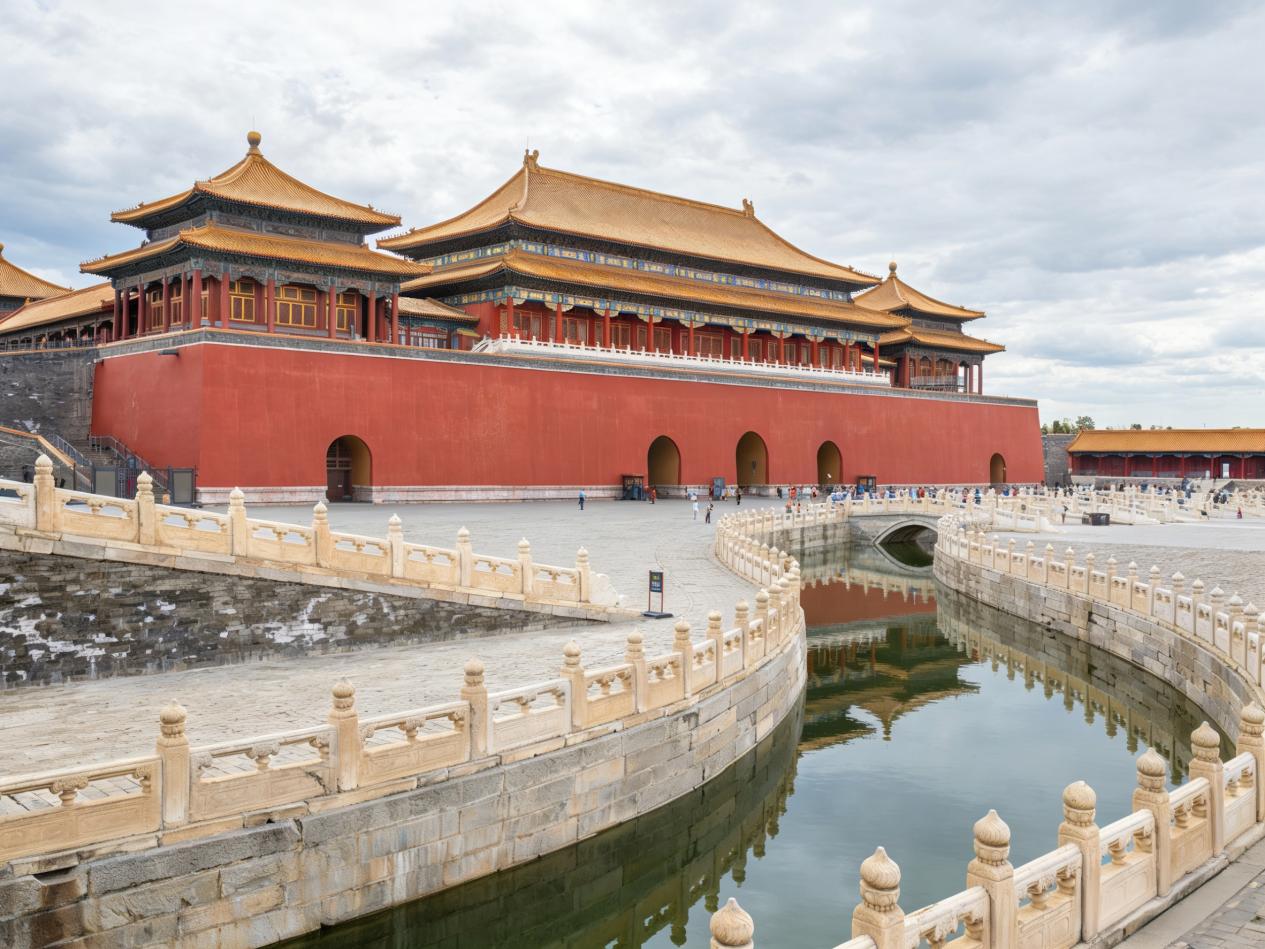
China's traditional culture emphasizes the concept of "a round heaven and a square earth," which was fully embodied in the construction of the Forbidden City. The palace complex has a rectangular layout, measuring 961 meters from north to south and 753 meters from east to west. A 52-meter-wide moat encircles the city walls, with exquisite corner towers standing at each quadrant. Passing through the solemn Meridian Gate and proceeding north along the central axis, one encounters the three principal halls—the Hall of Supreme Harmony, the Hall of Central Harmony, and the Hall of Preserving Harmony—perched on seven-meter-high white marble Sumeru bases, occupying the very center of the city. Their architectural scale, decorative grandeur, and visual composition reach unparalleled heights, embodying the supreme dignity stipulated in Confucian rituals: "The sovereign must reside at the very center of the world." Centered around these three halls, the Forbidden City extends outward, comprising over seventy palaces of various sizes, reportedly housing 9,999.5 rooms in total. From its completion in 1420 until the end of China's feudal dynasty in 1911, this imperial heartland witnessed the coronations of twenty-four emperors across the Ming and Qing dynasties, witnessed major state affairs and daily court life, and served as the seat of authority for issuing decrees throughout the empire.
The significance of the Forbidden City extends far beyond being merely an imperial residence. It stands as the culmination of China's millennia-old traditional rituals, architectural science, and philosophical concepts. The entire palace complex's design never shies away from the inherent conflicts within power structures or the natural yearnings rooted in blood ties—it embodies both the supreme dignity of court etiquette and the authentic warmth of imperial life; it enforces rigorous institutional constraints while also capturing the poetic essence of Eastern landscape painting, where "though crafted by human hands, it appears as if created by nature." Since its establishment, the Palace Museum has opened its gates to all, transforming this supreme private space into a cultural sanctuary shared by the entire nation, quietly yet profoundly contributing to modern China's emotional bonds with the international community and its collaborative pursuit of civilization. Recognized as one of the world's five great palaces (alongside Beijing's Forbidden City, France's Palace of Versailles, Britain's Buckingham Palace, America's White House, and Russia's Kremlin), the Forbidden City bears witness to the entire journey of an ancient civilization transitioning from the pinnacle of imperial rule onto the modern international stage.
Historical Witness: From the Forbidden Zone of Royal Power to a National Museum
Among the many royal palaces worldwide, the fate of the Forbidden City is exceptionally unique. The Palace of Versailles in France was converted into a museum after the French Revolution, while Buckingham Palace in the UK has remained a royal residence to this day. In contrast, the Forbidden City witnessed simultaneously the end of feudal dynasties, the collapse of imperial rule, and the emergence of civil society. In 1924, the last emperor, Puyi, was expelled from the palace. On October 10 of the following year, the Palace Museum was officially established, with a plaque inscribed "Palace Museum" prominently displayed above the Meridian Gate—a symbol marking the opening of this once-sealed imperial heartland to the world. On the former square of the Hall of Supreme Harmony, the thunderous chants of "Long live the Emperor" are no longer heard; instead, visitors from around the globe stroll leisurely among the blue bricks, conversing softly in various languages.
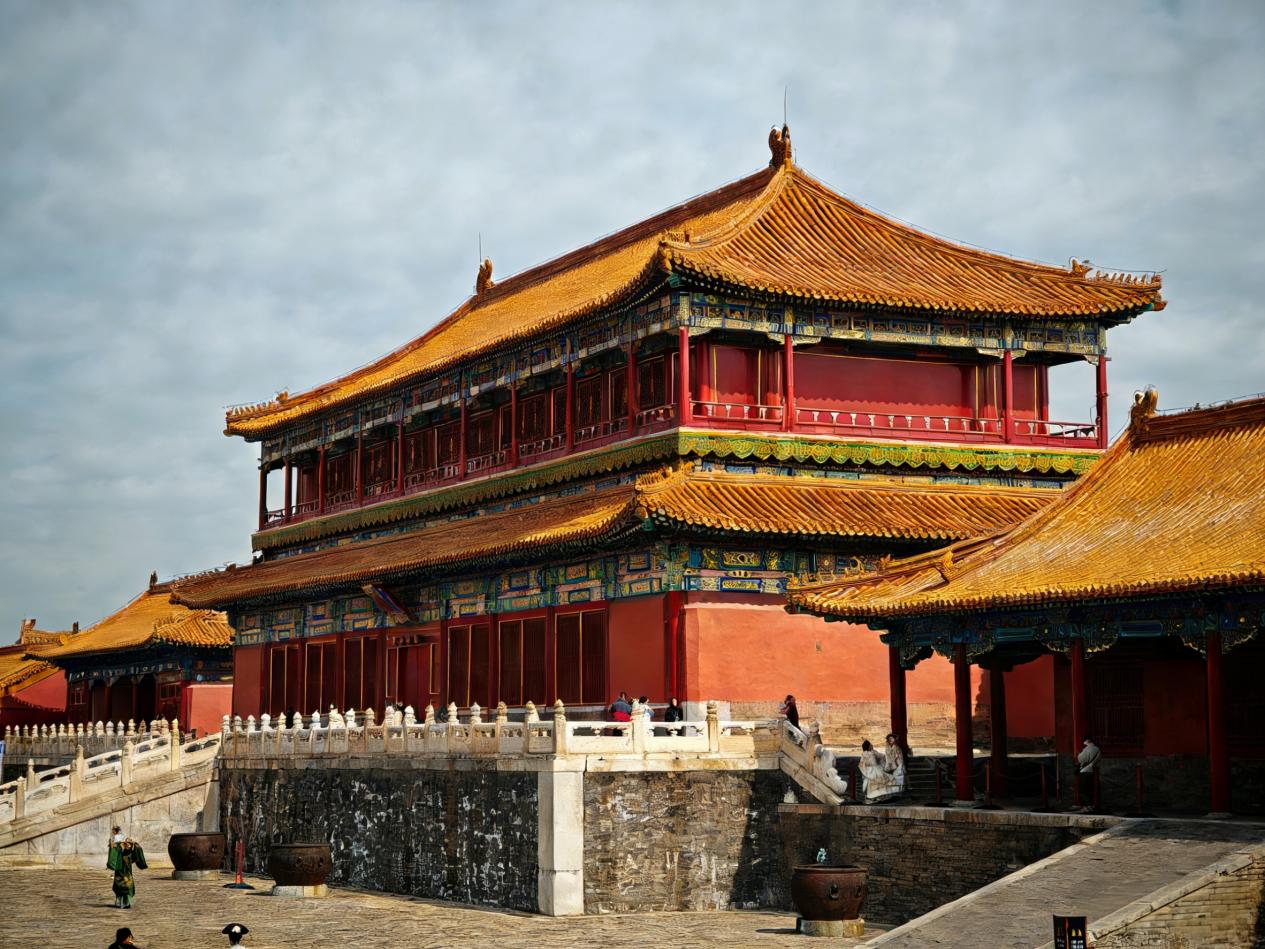
The number of precious cultural relics housed in the Palace Museum is truly breathtaking. According to the comprehensive inventory of collections launched in 2004 and completed over seven years, the total collection comprises 1,807,558 items (sets), among which 1,684,490 are precious artifacts—accounting for a staggering 93.2% of the total and 41.98% of all precious cultural relics held by public museums and cultural institutions nationwide. The collections span twenty-five major categories, including ceramics, calligraphy and painting, bronze ware, gold and silver artifacts, jade objects, lacquerware, enamel, textiles and embroidery, clocks and watches, as well as ancient books and documents. Notably, the Palace Museum's collection system is predominantly composed of imperial artifacts from the Ming and Qing dynasties, featuring a clear historical lineage, comprehensive categories, and well-defined hierarchies, making it the world's only fully preserved imperial collection system. Consequently, when UNESCO designated the Palace Museum as a World Heritage Site, it specifically emphasized that its garden landscapes and vast architectural complex housing furniture and handicrafts serve as an invaluable historical testament to China's civilization during the Ming and Qing eras.
Since 1925, the Forbidden City has served both as a museum and as the cultural relic itself. The Outer Court was used for exhibitions, allowing audiences worldwide to witness firsthand the imperial treasures of bygone eras; while the Inner Court preserved the original layout of the emperors 'and empresses' daily life during the late Qing Dynasty, recreating authentic moments of court rituals, daily routines, and solemn ceremonies. This understanding—that "the palace complex itself is the greatest cultural relic" —endows the Forbidden City with a unique character and辨识度 among numerous world heritage sites. It not only embodies the power dynamics and aesthetic pinnacle of past imperial civilization but also, with its well-deserved status, continues to convey the tangible warmth of cultural exchange and peaceful dialogue to modern China and the international community.
An International Perspective: From the European Tour Exhibition to the Global Footprint of the Digital Forbidden City
The profound connection between the Forbidden City and the world dates back far longer than most people imagine. As early as 1935, over a century ago, the "China Art International Exhibition" grandly opened at Berington Palace in London. The 735 precious cultural relics selected by the Palace Museum crossed the ocean to reach the heart of Europe, marking the first large-scale overseas exhibition of the museum's artifacts. The exhibition sparked a strong "China craze" across European countries, with mainstream Western media vying to report on the fantastical treasures of this "Eastern Magic Box." However, due to political turmoil, the museum's artifacts had few opportunities for large-scale international exhibitions for decades thereafter. It was not until after the reform and opening-up policy, particularly in the 21st century, that the Palace Museum's overseas cultural endeavors regained momentum.
The year 2025 marks the centennial anniversary of the Palace Museum, ushering in an unprecedented period of active international cultural exchange. In September of the same year, the museum's artifacts made their debut in the Czech Republic through the exhibition "A Hundred Selected Artifacts from the Palace Museum and Their Stories," presenting profound Eastern aesthetics to audiences in Central Europe. In November, the second overseas special exhibition celebrating the museum's centennial, themed "The Dragon," opened at the Musée du Quai Branly in France. Through carefully selected depictions of dragons from its collection of paintings, calligraphy, and court artifacts, the exhibition vividly illustrated the profound influence of this mythical creature on the East Asian cultural sphere over millennia. Subsequently, the special exhibition "Beauty in Diversity: The Beauty of Life in the Forbidden City" —featuring 76 exquisite artifacts from the Palace Museum—made its grand debut in December 2025 at the Kunsthistorisches Museum in Vienna, Austria. The exhibits spanned various categories including jade ware, porcelain, lacquerware, enamel, and timepieces, most of which were making their European debut, systematically showcasing China's imperial aesthetic philosophy of "artifacts embodying moral principles." By the end of 2025, this cultural relay was far from concluded: the Czech exhibition "A Hundred Selected Artifacts from the Palace Museum and Their Stories," the French "Dragon" exhibition at 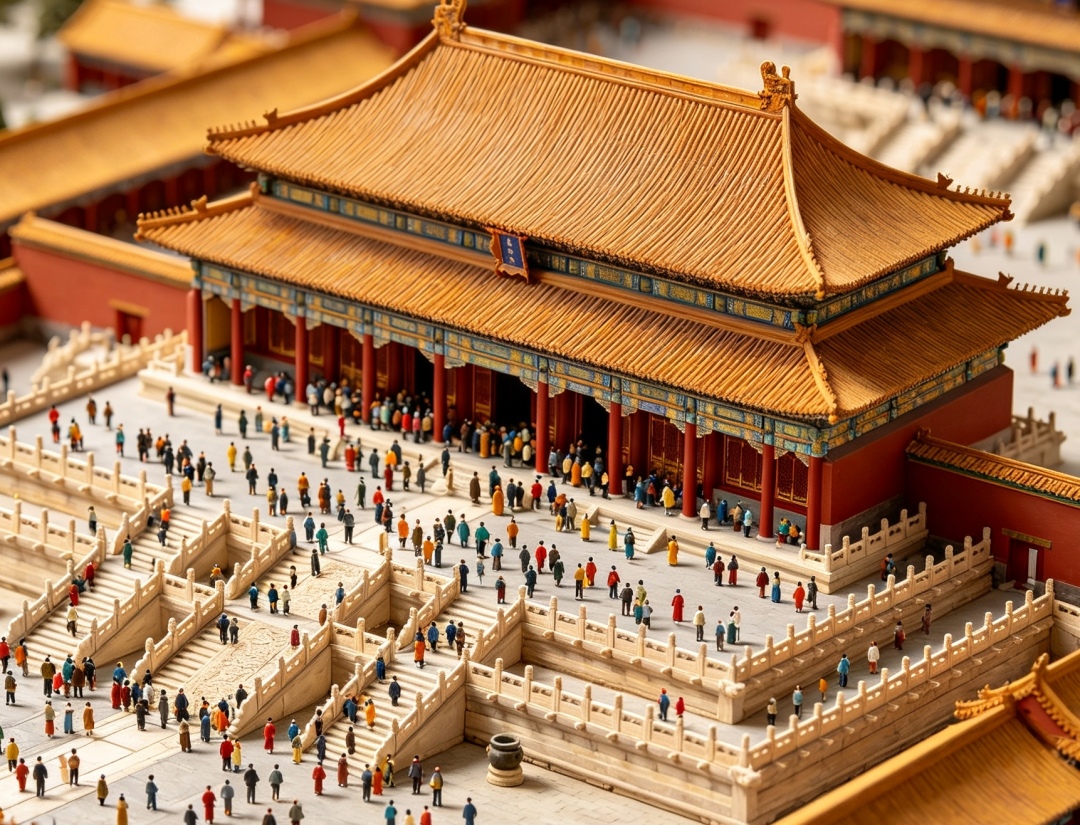 Quai Branly, and the Austrian "Beauty in Diversity" exhibition collectively formed the trilogy of overseas exhibitions celebrating the museum's centennial, fully introducing Eastern classical court aesthetics to audiences across Central and Europe.
If the overseas exhibition of cultural relics invites the world to "step into the Forbidden City," then the digital expansion of the Forbidden City establishes an ever-present Eastern sanctuary across the internet. In April 2026, the digital cultural exhibition "Taihe Abounds – Meeting the Forbidden City at the United Nations Office in Vienna" was grandly inaugurated at the UN Office in Vienna. Targeting permanent missions, UN staff, and local Vienna residents, the exhibition showcased the Forbidden City's cultural legacy through immersive digital displays, curated cultural artifacts, interactive educational experiences, and traditional Chinese musical performances—embodiment of its core philosophy: "Harmony and Mutual Learning Among Civilizations." In May of the same year, the Palace Museum's cultural exhibition "Endless Vitality" debuted in Rome, Italy, aligning with the International Museum Day theme "Museums: Bridges Connecting the World." Through innovative cultural designs, the exhibition further explored new narrative approaches for global cultural outreach.
In terms of physical visits, the Forbidden City's international tourism appeal is equally dazzling. Driven by ongoing visa facilitation policies, the Palace Museum welcomed 1.2 million international visitors in the first half of 2025, marking a 40% year-on-year increase. On the trending lists of numerous global travel platforms, the "Forbidden City" has become an indispensable cultural landmark. On contemporary social media, short videos shared by tourists from the UK, the US, or Japan—such as "I watched the sunset from the corner tower of the Forbidden City" —often garner millions of views within hours. With its unparalleled architectural beauty, rich cultural relics, and profound historical significance, the Forbidden City serves as the first window for global visitors to understand China and remains an ever-shining golden gateway.
Challenges and the Future: Writing Inheritance Between Fragility and Immortality
However, the more radiant the six-century-old Forbidden City becomes, the more severe the challenges it faces. The primary challenge stems from the inherent fragility of its cultural heritage structures. The Forbidden City is one of the largest and best-preserved wooden architectural complexes in existence worldwide. The natural deterioration of timber, insect infestation, fire hazards, and the intangible wear and tear caused by frequent visitor traffic are challenges inherent to any ancient palace built primarily of wood. Given the scale of this vast complex—spanning 112 hectares with a total floor area of 170,000 square meters—any minor oversight in conservation efforts could lead to irreversible and devastating consequences.
The tension between surging tourist numbers and cultural heritage preservation remains an urgent challenge. The Palace Museum's approved maximum capacity of 40,000 visitors per day was not set arbitrarily but determined through extensive scientific evaluation—to ensure visitor comfort while minimizing physical damage to brick-paved surfaces, wooden structures, and walls caused by high visitor density. Concurrently, large-scale restoration projects for ancient buildings are progressing in phases: By 2025, the conservation project of the Yangxin Hall is nearing completion, with this imperial study, residence, and administrative center—where eight Qing emperors conducted court affairs expected to reopen to the public within the year. The State Council-approved "Safe Palace Museum" initiative encompasses seven key components, including northern campus development, upgrades to underground storage facilities, and new security systems, all designed to eliminate risks in fire prevention, theft prevention, earthquake resistance, and emergency response. The core objective of this comprehensive protection system is singular: to deliver this unparalleled Forbidden City intact into its next six centuries.
It is encouraging that the Palace Museum has taken a leading position among global cultural institutions in digital transformation. Through over two decades of sustained investment, the "Panoramic Palace Museum" project has established 1,961 digital viewpoints across the internet, utilizing 360-degree panoramic photography to fully recreate the Forbidden City's landscape, enabling visitors worldwide to appreciate the grandeur of the Hall of Supreme Harmony and the serene beauty of the Imperial Garden from the comfort of their homes. The "Palace Museum Masterpieces Collection" employs ultra-high-definition displays with resolutions ranging from one billion to 6.9 billion pixels, presenting over a thousand precious calligraphic and painting works in meticulous detail— "as if viewed from an altitude of ten thousand meters." To date, more than one million of the museum's 1.86 million artifacts have been digitized, with its "Digital Artifacts Database" containing 100,000 high-definition images freely accessible to researchers and enthusiasts worldwide. Meanwhile, innovative initiatives such as the "V Palace Museum" VR tour and the "Listen to the Treasures" AI-powered podcast continue to transform national cultural heritage into culturally engaging products tailored to modern audiences.
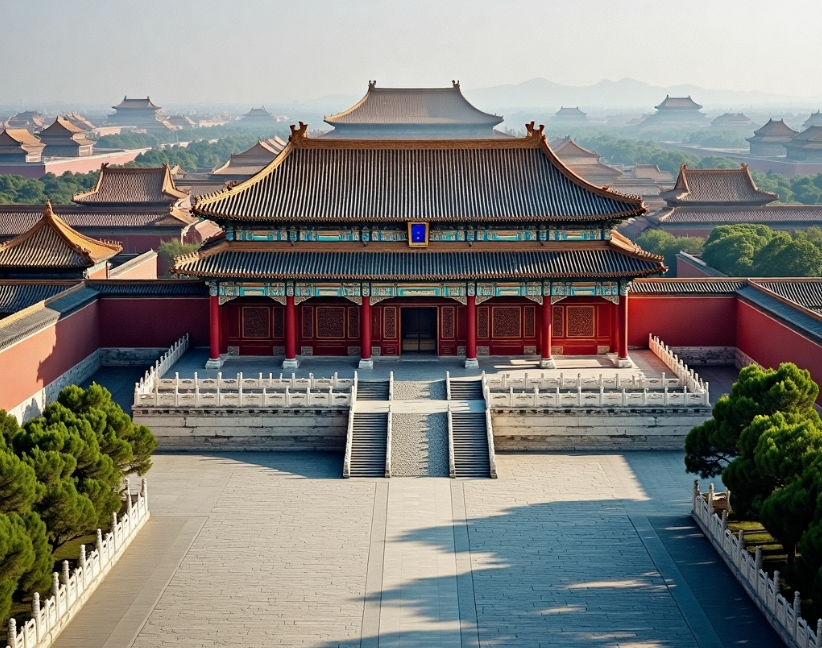
The future of the Forbidden City will not be content with merely "preservation." It strives to build a two-way bridge between "adherence to tradition" and "innovation" —bridging six centuries of architectural wisdom with contemporary art design, integrating ancient imperial collections with cutting-edge technological media, and facilitating dialogue between China's past and the world's future within the same city. In July 2024, the "Beijing Central Axis—A Masterpiece of China's Ideal Urban Order" was officially inscribed on the World Heritage List. As a core component of the entire central axis, the Forbidden City's heritage value and global influence will be further amplified through this new World Heritage nomination, securing more systematic attention and protection on the international multilateral stage. In October 2025, the "Taihe Forum," celebrating the centennial of the Palace Museum, brought together leaders from the global cultural and museum communities, reaffirming the pivotal role of Chinese civilization represented by the Forbidden City in international heritage conservation cooperation. Eighty-eight years ago, the first overseas exhibition of the Palace Museum's artifacts merely lit the first candle of Chinese civilization on the world stage; today, the digital expansion of the Forbidden City, international collaborative exhibitions, and record-breaking visitor numbers collectively form a robust cultural bridge. This bridge is bidirectional: the world gains insight into China through it, and China, in turn, gazes upon the world through it.
As the sunset's glow gently reflected off the city tower's eaves, the last tourists gradually dispersed, and the vermilion-lacquered gates of Shenwu Gate slowly closed in the twilight. Once again, the Palace Museum bid farewell to a day of hustle and bustle. Yet the story of the Forbidden City continues unabated—it remains both a distant silhouette preserved in sealed archives and a daily trending topic in the social media era; both a solemn historical witness and the most tender cultural aspiration cherished by millions. At the Ice Cellar Restaurant, visitors can gaze up at the centuries-old wooden beam ceiling while savoring simple meals; in the Cining Palace garden, children use AR devices to witness virtual ancient sika deer leaping from the walls; within the digital故宫 's virtual space, European high school students zoom in frame-by-frame on details of the "Along the River During the Qingming Festival" using laptops, exclaiming in awe. Six hundred years ago, Emperor Yongle could scarcely have imagined that the imperial sanctuary he built with millions of craftsmen would one day become humanity's shared living room—a silent narrator of an unextinguished river of civilization flowing from ancient times through our present day toward a vast, promising tomorrow.

