


On the vast and boundless Inner Mongolia grassland, there is a delicacy that has spanned thousands of years, carrying the boldness and deep affection of the nomadic peoples. It is known as the "supreme delicacy of the table" and is called "Zhaomu" in Mongolian. From the imperial feast during Genghis Khan's reign to the feast for guests on the grassland today, this savory delicacy is not only a feast for the taste buds but also a vivid carrier of Inner Mongolia's culture. Every bite of the crispy roasted lamb skin and every wisp of tender and juicy lamb meat tells the story of the grassland's vastness and the wisdom of the nomadic peoples, becoming a flavor symbol deeply rooted in Inner Mongolia.
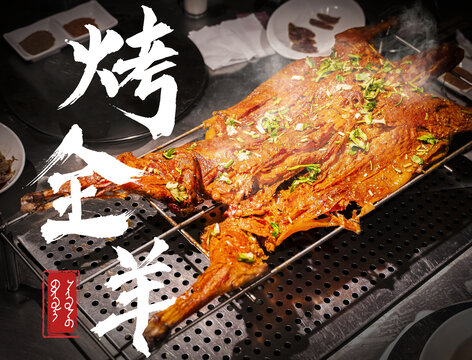
Millennial Origin: From Nomadic Flames to Imperial Feasts
The history of Inner Mongolia roast whole lamb can be traced back to the Hetao area thousands of years ago. At that time, the ancestors of the Ordos people had learned to roast whole prey over fire. This dietary method, which adapted to nomadic life, was passed down from generation to generation on the grassland and gradually evolved into the roast whole lamb craftsmanship we know today. According to "A Study of the Daur Mongolians", "Among all delicacies, none is superior to Wucha (roast whole lamb)", which fully reflects its lofty status in grassland cuisine.
In ancient times, roast whole lamb was not accessible to ordinary people but was an exclusive delicacy for Mongolian nobles. It was mostly used on festivals, birthdays, or occasions to entertain princes, nobles, and triumphant soldiers. Legend has it that it was Genghis Khan's favorite imperial dish and an indispensable highlight of the "Zhamayan" (feast of roasted horses) in the Yuan Dynasty, witnessing the rise and fall of the grassland dynasty and its glory. With the changes of the times, the development of transportation and tourism has brought this former imperial delicacy out of seclusion, making it a traditional delicacy for Inner Mongolians to entertain foreign guests and distinguished visitors, and allowing more people to taste this grassland flavor that has spanned thousands of years.
Ingenious Selection: A Born Delicacy Gifted by the Grassland
The soul of roast whole lamb starts with the unique selection of ingredients. The vastness and purity of the grassland have nurtured the highest quality lamb raw materials. Grasslands such as Hulunbuir and Xilingol in Inner Mongolia are rich in water and grass, with a suitable climate, and are rich in high-quality breeds such as Ujimqin sheep and Sunite lambs. These sheep forage freely on the grassland, drink natural spring water, and their meat has a light milky fragrance without any fishy or muttony smell.
Authentic roast whole lamb has extremely strict requirements for ingredient selection. Usually, fat castrated rams (gelded rams) aged 1-2 years old and weighing about 20 kilograms are selected. Lambs of this age have delicate muscle fibers, uniform fat distribution, and a good balance of fat and lean meat, resulting in the best taste after roasting. In recent years, Inner Mongolia has promoted the hybridization of small-tailed Han sheep and large-tailed sheep, further optimizing the meat quality and making the taste of roast whole lamb more tender. Slaughter is carried out in the traditional Halal way. After the blood is drained, the meat is aged at 0-4℃ for 48 hours, which not only improves the tenderness of the lamb but also removes excess muttony smell, laying the foundation for subsequent roasting.
Ancient Roasting: The Perfect Fusion of Fire and Meat
If ingredient selection is the foundation of roast whole lamb, then the roasting process is its soul. Authentic Inner Mongolia roast whole lamb adheres to the balance of the four elements: "salt, lamb, fire, and time", rejects complex seasonings, and only uses the simplest methods to stimulate the natural freshness and fragrance of the lamb itself.
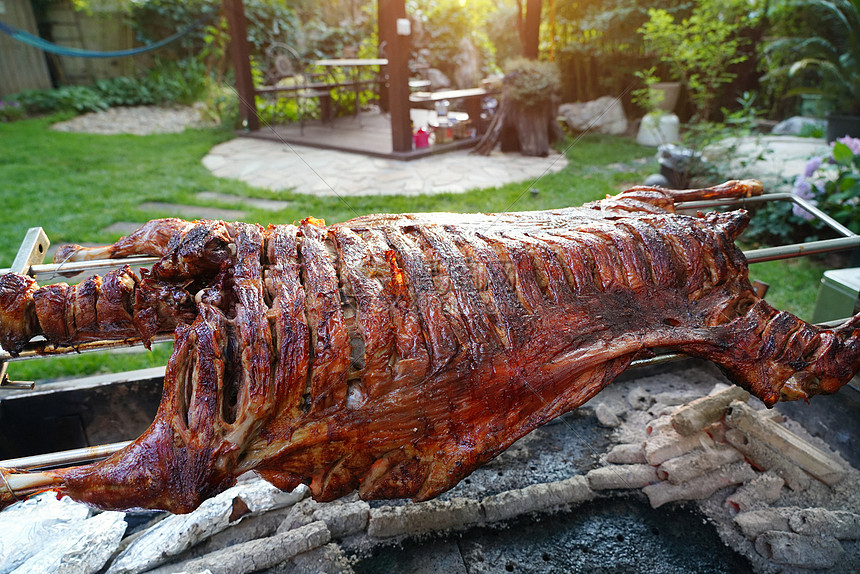
Before roasting, the cleaned lamb belly is filled with basic seasonings such as green onions, ginger, Chinese prickly ash, and salt, then seasoned with a small amount of spices such as grassland chives and white pepper, and rubbed repeatedly to allow the seasonings to fully penetrate. The fuel is preferably fruit wood such as apple wood and jujube wood. The fragrance produced when burning can add a unique smoky flavor to the lamb, which is far better than ordinary charcoal. Traditional roasting uses a tandoor or a dome-shaped brick oven. First, the oven is heated to 300-350℃, then the lamb is stretched open with steel skewers and hung inside. It is roasted at three stages of temperature control: first dried with far fire at 200℃, then colored with medium fire at 250℃, finally brushed with lamb tail oil to lock in the juice at 280℃, and then braised and roasted at 180℃ for 40 minutes. The whole process takes 2.5-3 hours, during which the lamb must be turned constantly to ensure uniform heating.
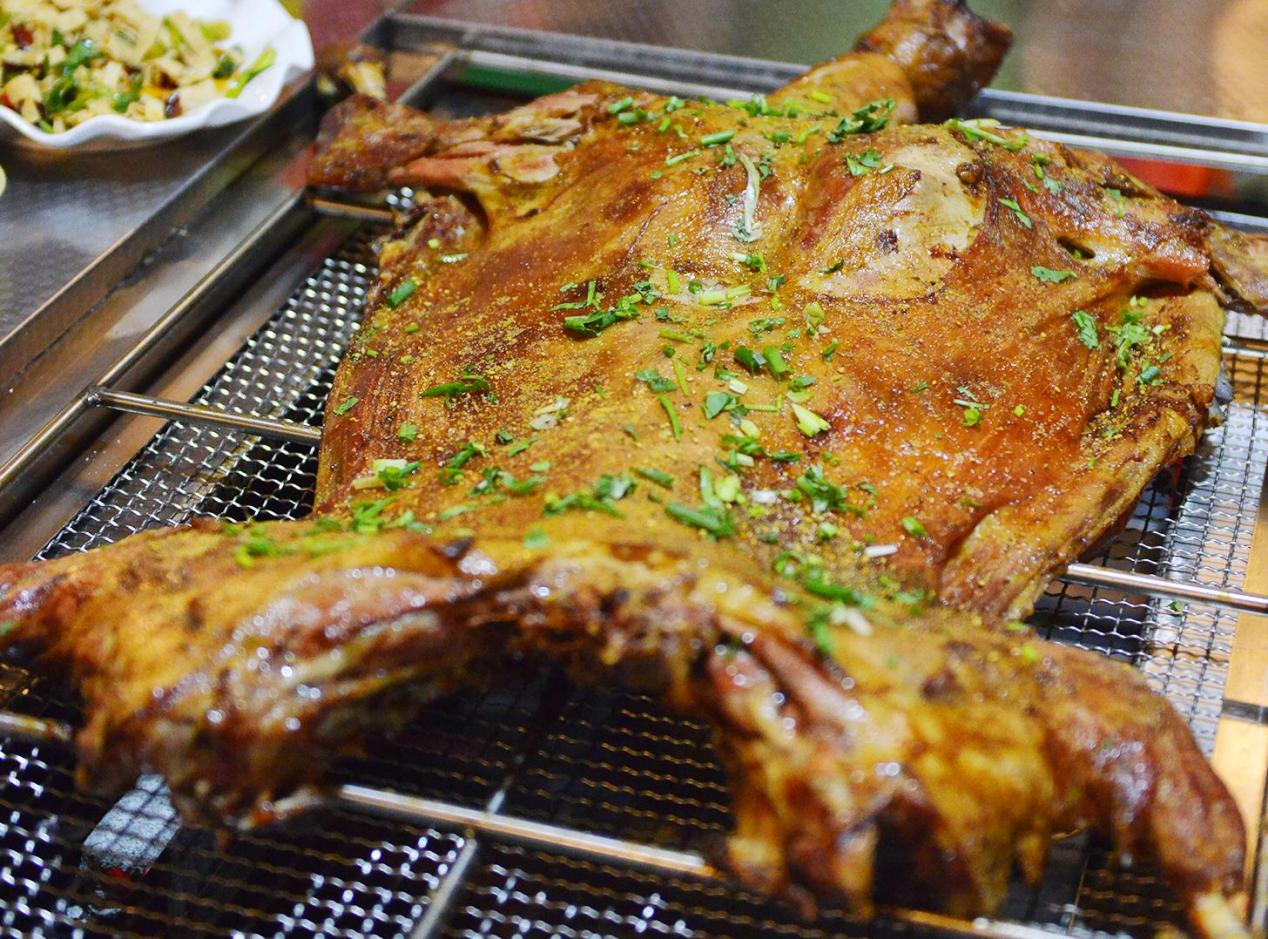
The roasted whole lamb has a complete shape and a golden and shiny color. The skin is as crispy as thin crackers, crumbling at a light bite, while the inner lamb meat is soft, tender, and juicy, rich but not greasy. Every bite can taste the fragrance of the grassland and the aroma of fruit wood, which is enough to amaze the taste buds without excessive seasonings.
Etiquette and Affection: The Grassland Boldness Hidden in the Delicacy
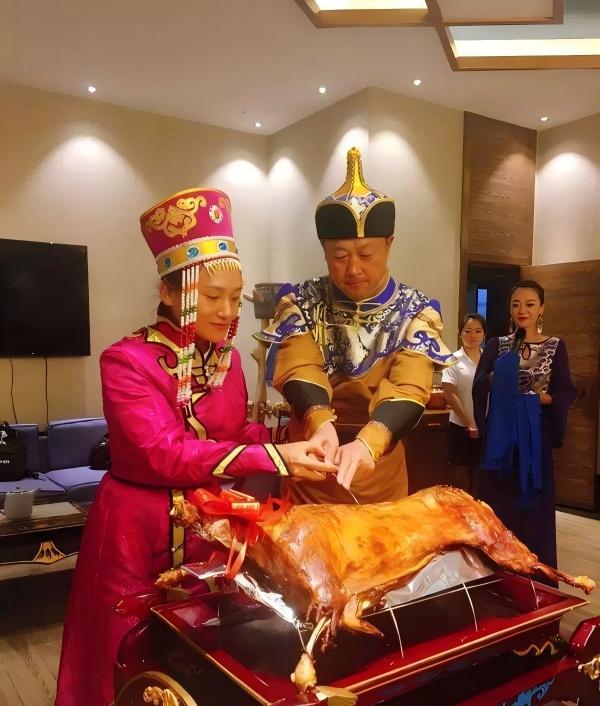
In Inner Mongolia, roast whole lamb has long surpassed the delicacy itself and become a carrier of folk etiquette and national spirit. Every roast whole lamb feast is accompanied by a solemn and warm sense of ritual. When the roast whole lamb is taken out of the oven, it is laid flat on a square wooden plate, with a red silk ribbon tied around its neck symbolizing auspiciousness and grandeur, and carried to the center of the feast by special personnel.
The lamb-cutting ceremony is the core of the whole feast. Etiquette ladies dressed in national costumes hold blue hada (hada on the grassland is mostly blue, symbolizing eternity and prosperity) in their hands, sing melodious toasting songs, and present the hada and silver bowls of milk wine to the most distinguished guests. There is also a tradition when toasting: the guest should hold the bowl with the left hand, dip the ring finger of the right hand in the wine, flick it towards the sky, the ground, and the forehead in turn to worship heaven, earth, and ancestors, and then drink it all in one gulp.
After the ceremony, special personnel cut the lamb meat with a Mongolian knife. First, the tenderloin lean meat is cut and served to the guests in order of their status, then the bone-in lamb meat is distributed. When eating, it can be dipped in refined salt, cumin, or chili powder, paired with green onions and cucumber strips to relieve greasiness, and accompanied by mare's milk wine or iced brick tea. A bite of meat and a sip of wine fully reflect the boldness and enthusiasm of the grassland people who "eat meat in large mouthfuls and drink wine in large bowls".
Contemporary Rebirth: The Inheritance and Innovation of a Millennium-Old Flavor
Today, Inner Mongolia roast whole lamb has become a cultural card of Inner Mongolia. While adhering to tradition, it is constantly innovating and radiating new vitality. The traditional roasting craftsmanship has been included in the local intangible cultural heritage, and old craftsmen pass down the secrets of ingredient selection, marinating, and roasting from mouth to mouth, allowing the millennium-old flavor to continue.
In terms of taste and form, roast whole lamb has also made continuous breakthroughs. In addition to the traditional original flavor, it has also launched various flavors such as garlic, black pepper, and honey to meet the needs of different consumers; the emergence of mini roast whole lamb and vacuum-packed ready-to-eat products has allowed this grassland delicacy to go out of the grassland and enter thousands of households. At the same time, roast whole lamb cultural festivals and grassland food festivals held in various places allow more people to understand the cultural stories behind roast whole lamb by displaying the roasting craftsmanship and folk etiquette.
From the millennial nomadic flames to the contemporary food feast, Inner Mongolia roast whole lamb carries not only the flavor of a dish but also the wisdom, enthusiasm, and inheritance of the grassland peoples. It is a gift from nature, a persistence of craftsmen, a carrier of etiquette, and the most vivid and profound taste memory of the grassland in the heart of every taster. A bite of the crispy and fragrant meat enters the throat, and you can understand the vastness and boldness of the grassland, as well as the nomadic peoples' love and reverence for life.

