


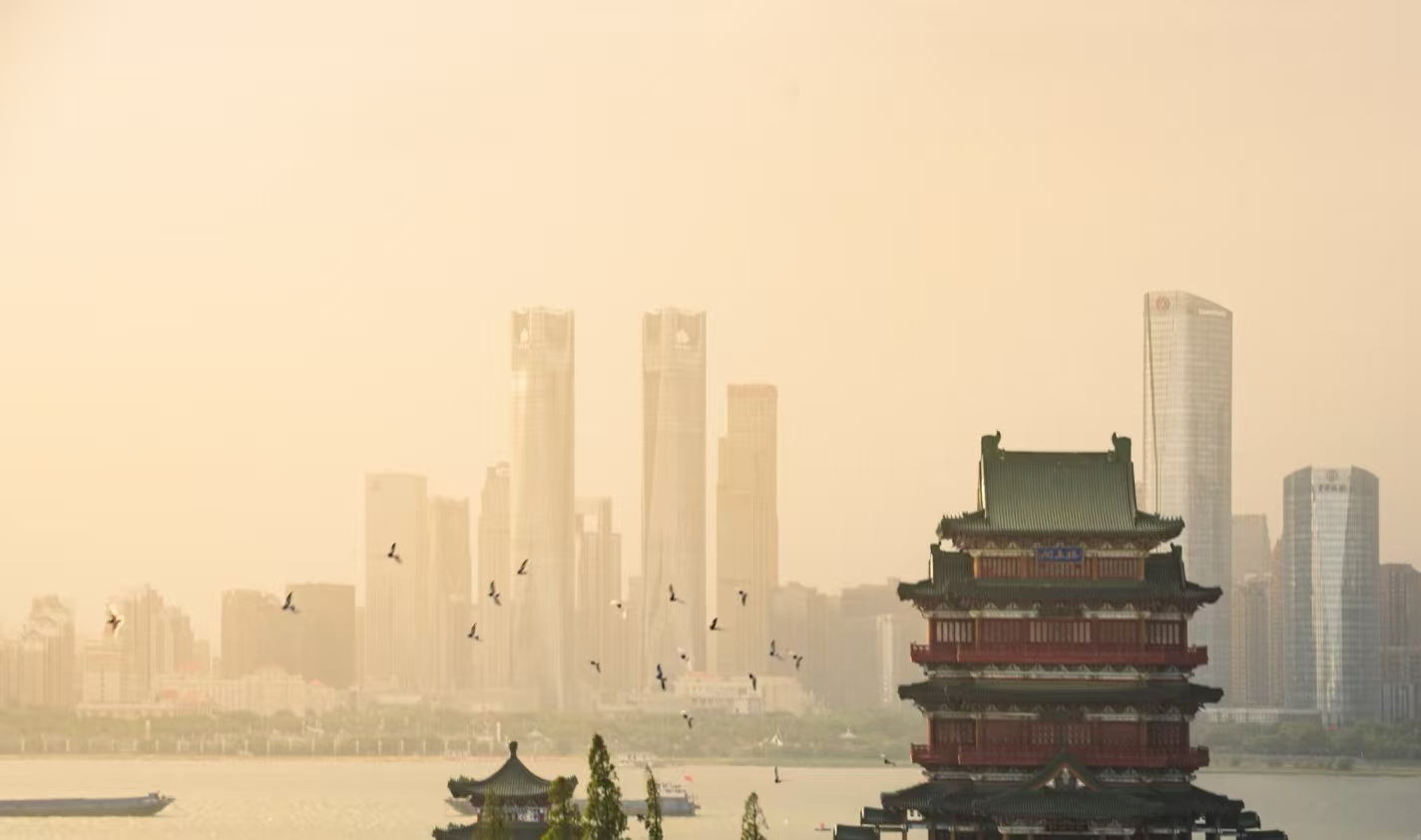
If the Tang Dynasty had a trending list, the topic of the Double Ninth Festival in the year 675 would surely have exploded across the era. On that day, on a newly completed pavilion by the Gan River in Nanchang, Jiangxi, a spirited young man picked up his brush and wrote the immortal couplet: “The rainbow clouds and lone duck fly together; the autumn river shares one hue with the vast sky.” With that single stroke, he etched the pavilion forever into the radiant spectrum of Chinese civilisation. This is the legendary tale of the Tengwang Pavilion and Wang Bo, a story that has spanned a thousand years. A pavilion, made immortal by one piece of writing, has weathered countless storms — the force behind it is something far beyond timber, bricks and tiles: it is the power of literature and the soul of culture. In this article, please join me in revisiting the Tengwang Pavilion, to feel the enduring literary spirit and indomitable character that have survived the passage of a millennium.
Origin: The Start of a “Feng Shui Pavilion” and the Arrival of a Prodigy
Before it became a cultural icon, the pavilion’s original purpose might seem rather private and casual. In 653 AD (the fourth year of the Yonghui era of the Tang Dynasty), Li Yuanying, the son of Emperor Gaozu (Li Yuan) and younger brother of Emperor Taizong (Li Shimin), was appointed governor of Hongzhou (present-day Nanchang). Fond of feasting and music, this prince built a pavilion for his daily pleasures—ascending it to drink, admire the view and host banquets. He named it the Tengwang Pavilion after his own title, Prince Teng.
But it was more than twenty years later, at a grand banquet, that the true soul was infused into this royal pavilion. In 675, Governor Yan Boyu rebuilt the Tengwang Pavilion and held a lavish feast there. A young, ambitious poet who happened to be passing through attended the gathering. That was Wang Bo, one of the “Four Great Poets of the Early Tang”. During the banquet, Governor Yan secretly hoped to let his son-in-law, Wu Zizhang, who had prepared in advance, become famous by presenting an essay titled “Preface to the Tengwang Pavilion”. When everyone pretended to decline out of modesty, the unassuming Wang Bo did not catch the hint. He took up his brush, let ink flow freely, and in one breath wrote the peerless “Preface to the Tengwang Pavilion”—the finest parallel prose in Chinese history. The moment this brilliant, magnificent and visionary piece was completed, the pavilion was elevated to its pinnacle of glory, and its fame spread across the land.
“The Rainbow Clouds and Lone Duck Fly Together”: The Undying Literary Soul Amidst Wind and Rain
If “Preface to the Tengwang Pavilion” were Wang Bo’s postcard to eternity, then the lament—”How many autumns have passed as stars moved and seasons changed?”—became a prophecy for the pavilion’s own destiny. Over the thousand years that followed, the Tengwang Pavilion was caught in a bittersweet cycle: built and rebuilt, destroyed and restored, suffering 28 destructions and 29 reconstructions. In each of its historical incarnations, the pavilion stood for an average of less than 46 years.
What sustained generation after generation in never abandoning it was the “immortal literary soul” that Wang Bo had breathed into it. As Mei Lianhua, a research fellow at the Nanchang Museum, puts it, “This pavilion has long transcended its physical existence of wood and stone; it has become a living vessel of the civilisation’s genes.” Even war and fire could never erase a peerless masterpiece from the hearts of the people.
Carved Beams and Painted Rafters, Bearing Ancient Charm: Climbing Today’s Tengwang Pavilion
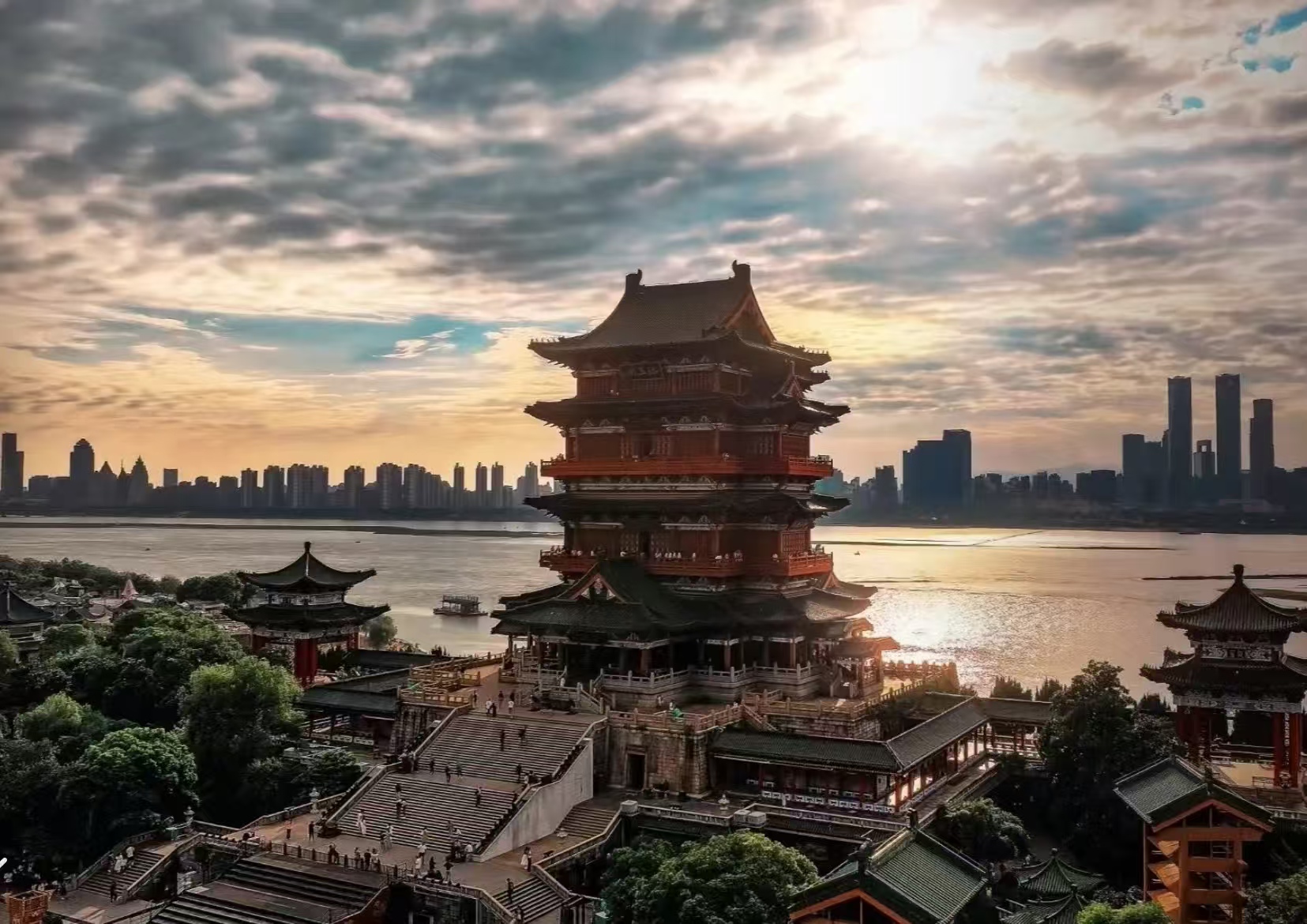
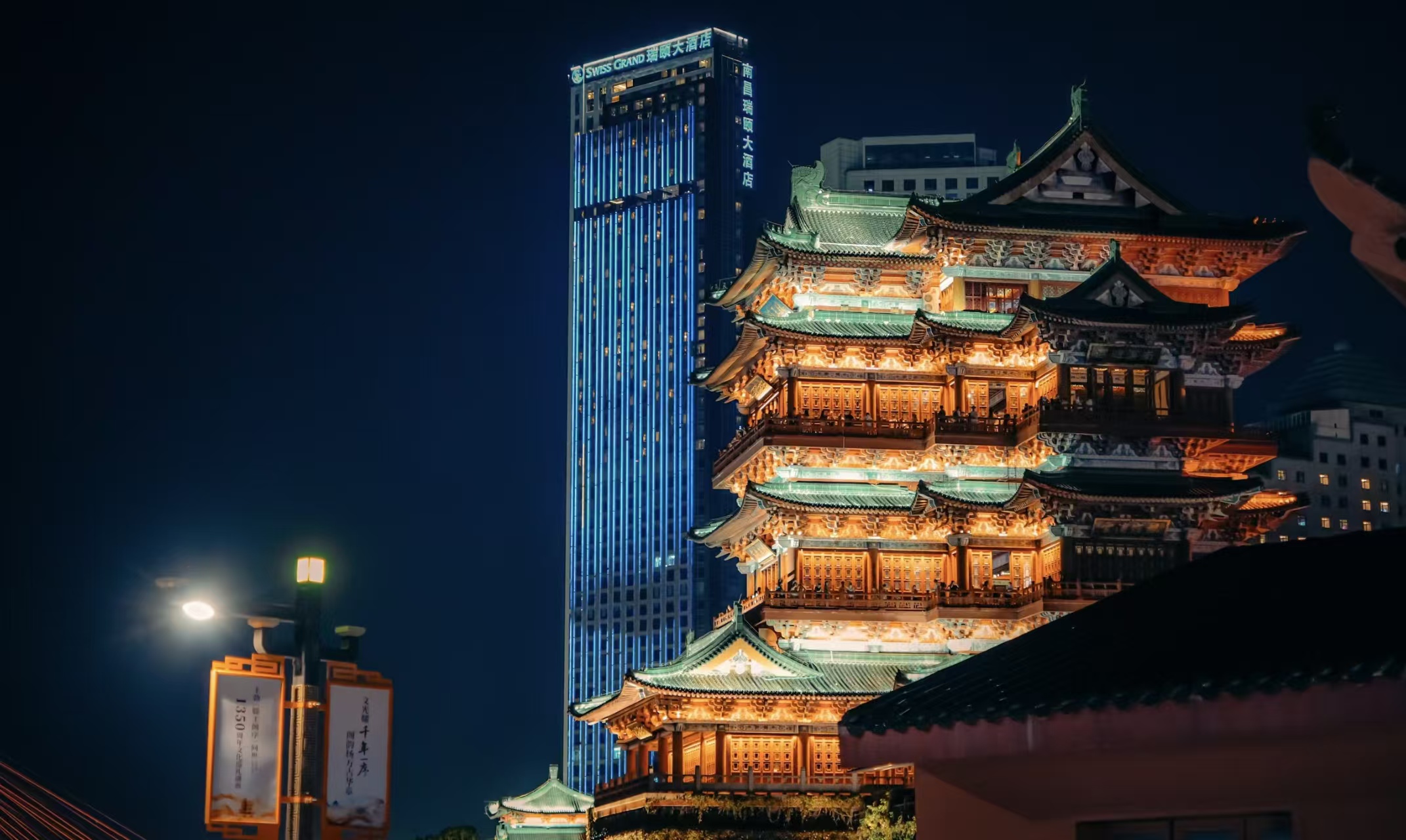
The current Tengwang Pavilion stands about 57.5 metres tall, with a floor area of 13,000 square metres. It adopts a unique “three-storey exterior, seven-level interior” structure that draws visitors into its depths. Its outward appearance is highly ingenious: the three facades offer different views, breaking the convention of ancient pavilions that look the same from all four sides. This not only enhances the architectural aesthetics but also echoes Wang Bo’s line, “I part the crimson curtains and gaze down at the carved rafters,” capturing the delight of shifting perspectives as one moves around.
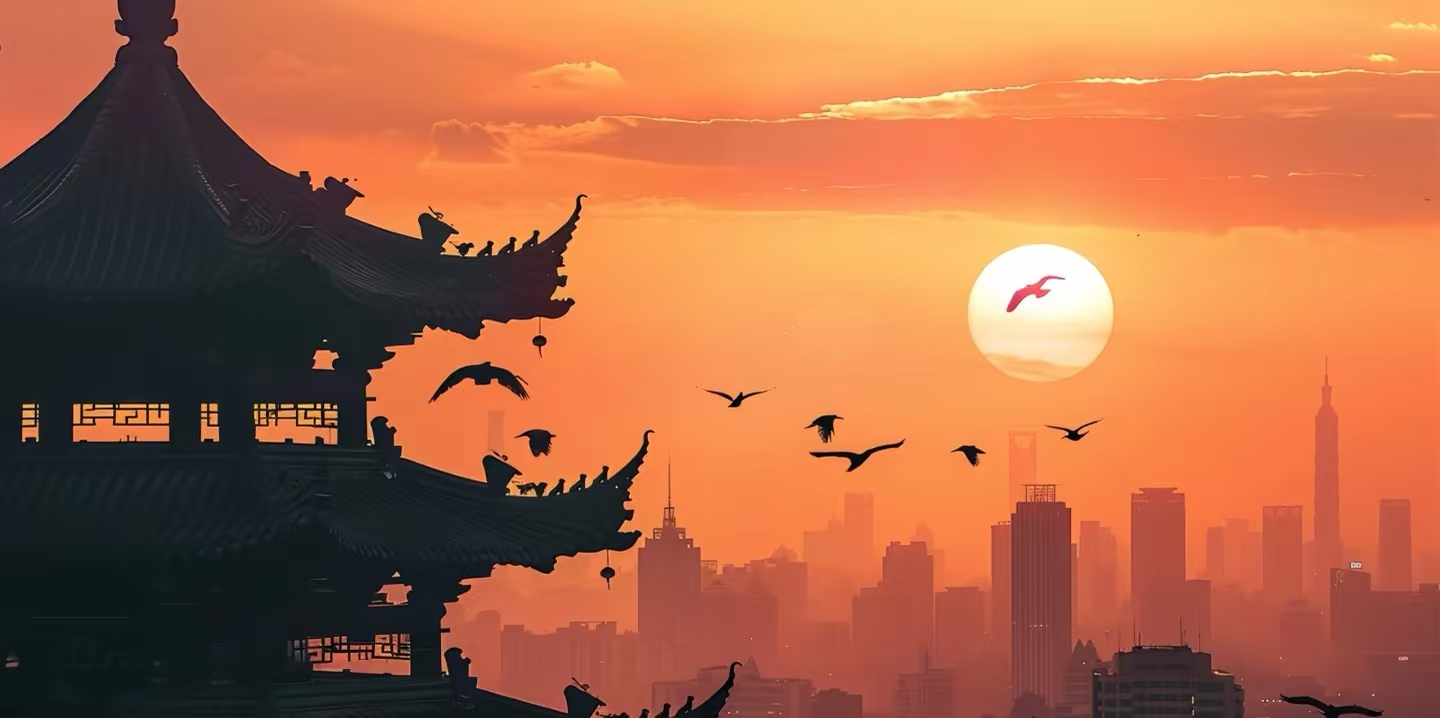
Inside the main building, each floor is like walking through a long tapestry of Jiangxi culture. In the first-floor hall, a white jade relief titled “The Fair Wind Sends Wang Bo to Tengwang Pavilion” illustrates the legend of his overnight arrival in Nanchang, sparking the imagination. Ascending the stairs, one can experience the very “outstanding men and numinous land” celebrated in the “Preface”—the second floor’s figures display more than 80 historical luminaries, showing the region’s profound cultural legacy. One may also feel the continuity of a “technological connection” that has been innovated across centuries: the fourth floor features a holographic projection vividly illustrating the transformations of the pavilion through successive dynasties, while the fifth floor houses a precious authentic copy of the “Preface to the Tengwang Pavilion” in Su Shi’s (Dongpo’s) calligraphy. Reaching the observation terrace and leaning on the railing, one looks far into the distance: the Gan River flows endlessly, the stunning beauty of “the rainbow clouds and lone duck flying together” is still there, harmoniously contrasted with the modern skyline of the Honggutan New District.

