


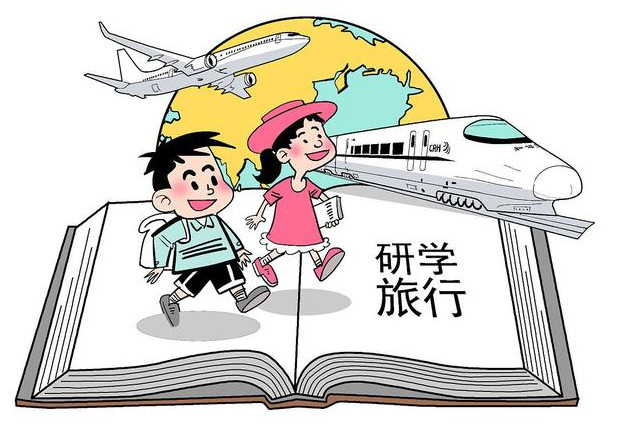
"Reading ten thousand books and traveling ten thousand miles" — study tours are supposed to be an important link connecting campus education and social practice, aiming to let primary and secondary school students step out of the classroom, broaden their horizons, and temper their moral character. In 2016, the Ministry of Education and 10 other departments jointly issued relevant opinions, clarifying the principle of public welfare and prohibiting profit-making activities. However, many study tour activities have gradually deviated from their original purpose and become a variant of "high-priced tourism" — with excessive charges, watered-down itineraries, and form over content. This has overwhelmed parents with doubts and cast a shadow over the original intention of education for well-rounded development.
Obvious Chaos: Study Tours Become "Money-making Tours", Parents Complain They Can't Afford It
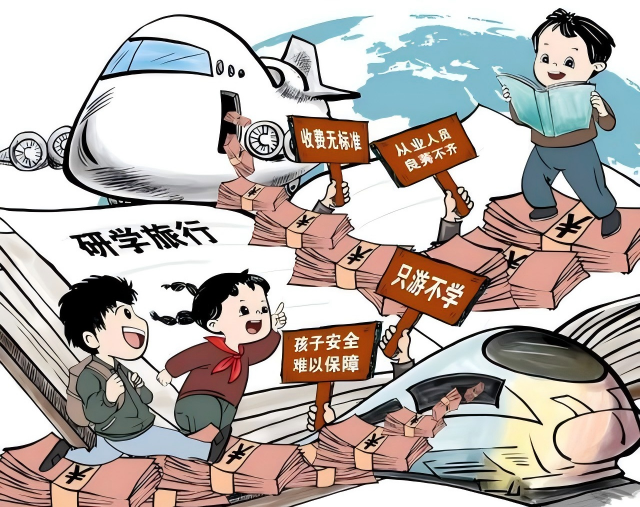
Nowadays, notifications for study tour fees in parent groups often make people frown. The fees start from several hundred yuan, go up to thousands of yuan, and even reach nearly 10,000 yuan per person for "high-end study camps". A three-day and two-night study tour for primary school students in a provincial capital city costs as high as 1,880 yuan, with accommodation fees comparable to five-star hotels and inflated catering standards, while the actual cost is much lower than the quoted price; a study tour for a middle school in Shenzhen costs 2,680 yuan per person, which is higher than similar routes in the surrounding areas, and most scenic spots are free, with unclear details of core expenditures.
More disappointing than the excessive charges is the serious formalism. Many study tour activities seem "high-end" but are actually "taking photos and checking in at another place": the promised intangible cultural heritage learning is nothing more than watching a 10-minute promotional video, with the rest of the time spent in shopping spots; activities under the banner of scientific exploration have degraded into simple manual experiences or scenic spot visits, where students do not need to think at all throughout the process. What is even more helpless is that some schools link study tours with social practice credits, and put disguised pressure on parents in the name of "voluntary but recommended for all participation", forcing parents to pay reluctantly, making study tours an unavoidable "hidden fine".
In-depth Analysis: Multiple Intertwined Factors Give Rise to the Chaos of Study Tours
The distortion of study tours stems from the superposition of multiple factors such as interests, supervision, and cognition. First, the interest chain and excessive intervention of commercial capital. Some study tour institutions cooperate privately with schools to earn high profits by raising quotations and falsifying costs, while some schools turn a blind eye to unreasonable charges in order to obtain "management fees" and "sponsorship fees". At the same time, cross-border capital has flocked into the study tour market. Many institutions lack educational qualifications and simply aim for profit, packaging study tours as "high-end products" to extract money from parents.
Second, the imperfect supervision system with obvious loopholes. Although the education department has repeatedly emphasized the public welfare nature of study tours, there is a lack of specific supervision mechanisms and punishment measures, as well as clear norms for charging standards, curriculum quality, and safety guarantees. The threshold for accessing the study tour industry is low; some institutions can carry out business by affiliating with travel agency licenses, and there are even chaos such as "certificate black markets" and "qualification resale", leading to the frequent occurrence of irregular behaviors. In addition, the cooperation between schools and institutions lacks an open and transparent bidding process, making it difficult for parents to exercise their supervisory rights.
Third, deviations in educational cognition and lack of curriculum design. Some schools and parents have a superficial understanding of study tours, equating them with "tourism" and ignoring the core of "research" and "learning". Many study tour institutions lack professional educational teams, and their curriculum design is seriously homogenized. They fail to design hierarchical courses according to students' physical and mental characteristics and academic needs, resulting in "one-size-fits-all tours" that are difficult to achieve the educational goal and eventually degenerate into formalism of "traveling without learning".
Breaking the Deadlock: Joint Efforts to Let Study Tours Return to the Essence of Education
Faced with the chaos of study tours, only through joint and precise efforts can we clear the fog and let study tours return to the original intention of education for well-rounded development. First, strengthen supervision and standardize market order. Education, culture and tourism departments should improve the access standards, withdrawal mechanisms and evaluation systems for study tour institutions, clarify guided charging prices, require institutions to disclose cost details, and severely investigate and punish behaviors such as false pricing and illegal profit-making. At the same time, standardize the cooperation process between schools and institutions, implement open bidding, and protect parents' right to know and supervise.
Second, focus on the core of the curriculum and improve the quality of study tours. Schools should take the lead in designing study tour courses, combine regional characteristics and academic characteristics to create systematic and personalized study tour courses, and deeply integrate textbook knowledge with practical experience. For example, Xiangdu District of Xingtai City, Hebei Province, has created hierarchical study tour courses: lower grades of primary school focus on local experience, and junior high school focuses on scientific inquiry, allowing "research" to run through the whole process and avoid formalism. At the same time, strengthen the construction of the study tour instructor team, eliminate phenomena such as "part-time college students reading from scripts", and improve the professionalism of study tours.
Finally, improve the funding mechanism to ensure educational equity. Implement a diversified funding mechanism jointly borne by the government, schools, society and families, reduce or exempt fees for students from poor families, and ensure that economic conditions do not become an obstacle to participating in study tours. Encourage social donations and public welfare activities to support the development of study tours and reduce the burden on families.
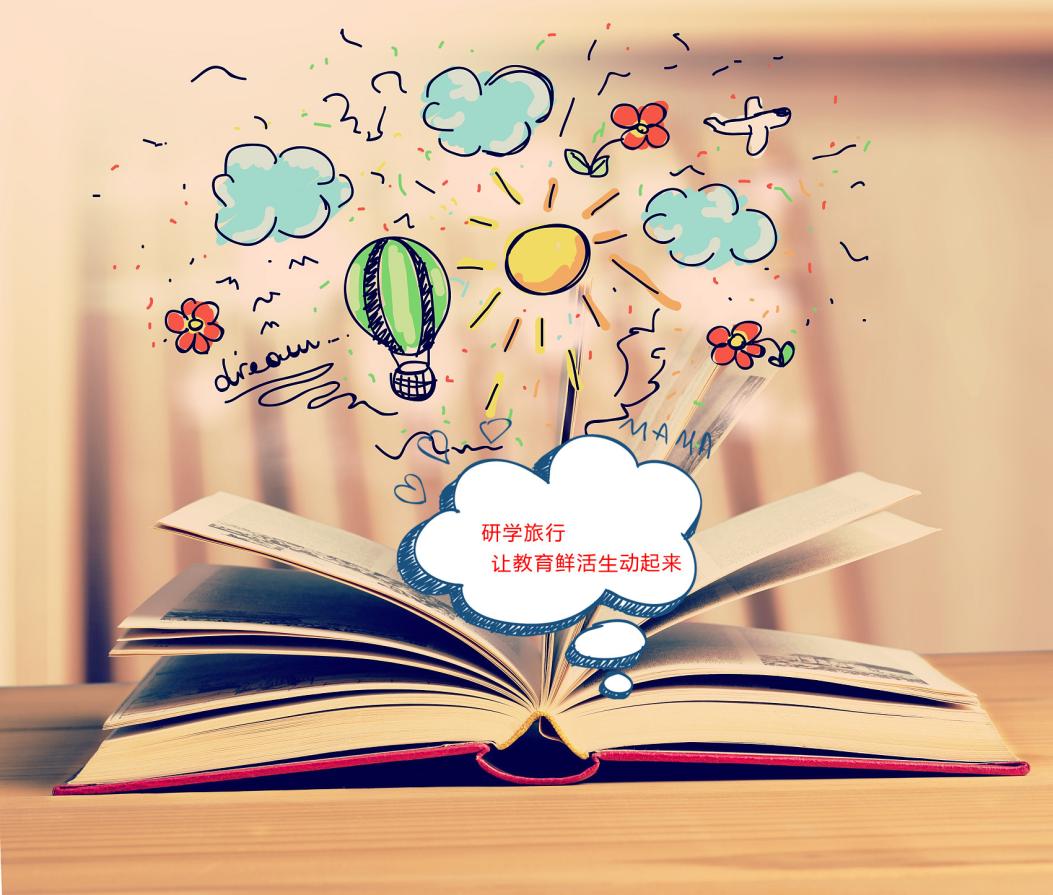
Fortunately, a positive trend has gradually emerged. Education bureaus in many places have started special inspections on irregular behaviors in study tours and refined the requirements for fee disclosure; many regions have built demonstration study tour bases and high-quality routes, with more scientific curriculum design; more and more parents and schools have begun to view study tours rationally, abandoning the "price-only theory" and "scenic spot-only theory". It is believed that with the joint efforts of all parties, study tours will eventually get rid of commercial impetuosity, return to the essence of "learning as the main focus and research as the soul", and truly become a "second classroom" to help the growth of primary and secondary school students.

