


In the relentless pursuit of making electric vehicles indistinguishable from their internal combustion counterparts in terms of convenience, one metric has long stood as the final frontier: charging time. For years, even the most advanced EVs have required drivers to accept a fundamental trade-off—patience for sustainability, with fast charging often still meaning a half-hour stop. In March 2026, Chinese automaker BYD made a bold claim that threatens to obliterate that compromise. With the introduction of its second-generation Blade Battery and the accompanying “Flash Charging” infrastructure, BYD asserts that it can now replenish a vehicle’s battery from ten percent to nearly full in just nine minutes. This development, centered around a 1,500 kW charging architecture, has ignited a global conversation about the future of mobility, drawing both fervent praise for its engineering ambition and sharp skepticism regarding its real-world viability and long-term implications.
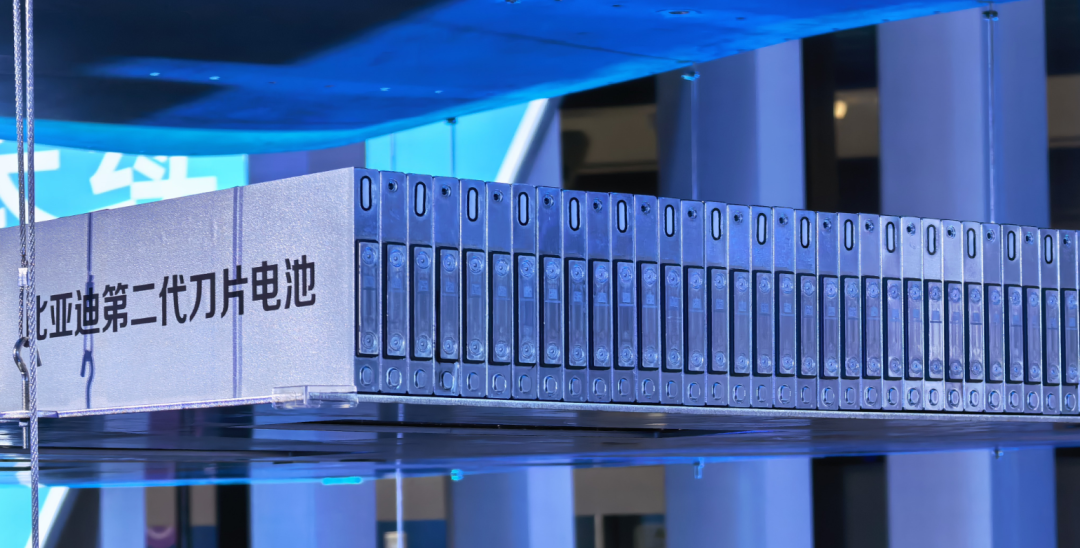
At the heart of this technological leap lies a fundamental re-engineering of the battery cell itself. BYD’s original Blade Battery, launched in 2020, was celebrated for its safety and durability, primarily using Lithium Iron Phosphate (LFP) chemistry. The new iteration, however, moves to a more complex formulation known as Lithium Manganese Iron Phosphate (LMFP) combined with silicon-carbon anode technology. This shift is critical because it addresses the traditional limitations of LFP chemistry—specifically its lower voltage and slower charging rates. By incorporating manganese, BYD has succeeded in raising the cell voltage from 3.2V to 3.8V while simultaneously reducing internal resistance by twenty percent. The result is a battery capable of sustaining a 10C charging rate, a figure that dwarfs the 3C to 5C rates typical of current market leaders. In practical terms, this chemistry allows lithium ions to move from the cathode to the anode at unprecedented speeds without causing the structural damage or lithium plating that typically plagues ultra-fast charging.
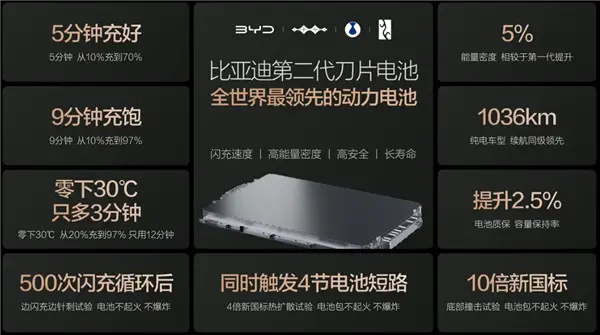
The statistics associated with this new system are staggering enough to give any industry analyst pause. During a public demonstration, a BYD Yangwang U8L was shown charging from 10 percent to 97 percent in just nine minutes and seven seconds. Even more remarkably, the company demonstrated that the system maintains its high performance under extreme cold, a notorious Achilles’ heel for electric vehicles. In temperatures plummeting to -35 degrees Celsius, a BYD Seal 06 managed to charge from 20 percent to 97 percent in just over nine minutes, with the total time stretching only to twelve minutes in even harsher conditions. This performance effectively neutralizes one of the most persistent objections to EV adoption in colder climates. Beyond speed, the new battery architecture also contributes to greater energy density, allowing flagship models like the Denza Z9GT to achieve a CLTC-rated range exceeding 1,000 kilometers on a single charge.
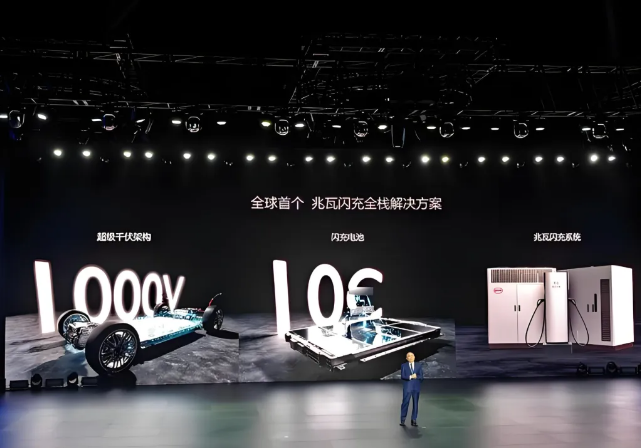
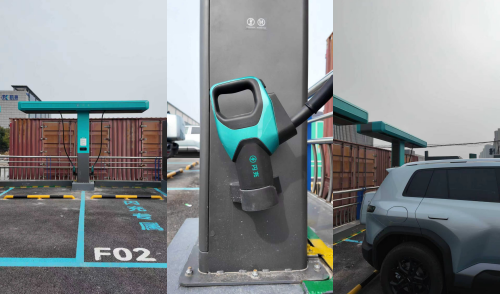
However, a battery that can accept a 1,500 kW charge is useless without a charger capable of delivering it, and it is here that BYD’s strategy reveals its most sophisticated layer. Recognizing that the global grid infrastructure is not yet equipped to handle thousands of megawatt-level chargers drawing power simultaneously, BYD engineers equipped their flash charging stations with on-site energy storage systems. These systems act as a buffer; they draw power from the grid slowly and continuously, storing it in large-scale battery banks. When a vehicle arrives to charge, the station releases this stored energy at the full 1,500 kW power, bypassing the need for grid upgrades that would otherwise take years and billions of dollars to complete. This design effectively solves the “grid capacity” paradox that has hampered the deployment of ultra-fast chargers in markets like the United States and Europe. BYD has backed this engineering solution with an aggressive deployment plan, aiming to establish 20,000 such flash charging stations across China by the end of 2026, including 2,000 along major highways, with an international rollout planned for the following year.
Despite the impressive engineering, the announcement has been met with a wave of skepticism that highlights the gap between laboratory conditions and the messy reality of daily use. Critics have pointed out that the “nine-minute” claim, while technically accurate, represents an optimal scenario that may not be replicable for most drivers. The peak charging speed is only achievable within a specific state-of-charge window—typically from 10 percent to 70 percent—after which the system throttles back to protect the battery. Furthermore, while BYD is building its own network, the vast majority of charging points in existence today operate at 120 kW to 250 kW, meaning that for the foreseeable future, owners of these new vehicles will still be reliant on slower chargers for the majority of their charging sessions. The disparity between what the vehicle can theoretically accept and what the existing infrastructure can deliver presents a significant challenge to the technology’s immediate utility.
The most persistent and perhaps most critical concerns revolve around battery longevity and safety. The fundamental physics of electrochemistry dictate that faster charging generates more heat and places greater mechanical stress on a battery’s internal structure. While BYD has implemented a sophisticated thermal management system to dissipate the immense heat generated by 1,500 kW charging—equivalent to the heating output of dozens of household air conditioners—skeptics argue that long-term, high-frequency use of flash charging could accelerate capacity degradation. In response to these concerns, BYD has taken the unusual step of enhancing its warranty coverage, raising the capacity retention guarantees for the second-generation Blade Battery by 2.5 percent compared to its predecessor. The company also conducted extreme safety tests, including performing a nail penetration test while the battery was actively flash charging after 500 cycles, demonstrating no thermal runaway or fire. While these tests are designed to inspire confidence, only years of real-world data will reveal whether the long-term durability matches the short-term performance.
The industry reaction to BYD’s announcement has been complex, revealing deeper fault lines in the transition to electric mobility. Some competitors have questioned whether the technology is truly a breakthrough or merely a marketing spectacle designed to capture headlines. This skepticism is fueled in part by the fact that BYD has integrated the flash charging capability not only into its luxury Yangwang and Denza brands but also into mass-market models like the Sea Lion 06 and the Fangchengbao Titanium 3, which are priced starting around $15,000. This aggressive democratization of advanced technology puts immense pressure on rivals who may not be able to match the performance at a similar price point. Additionally, the announcement has reignited the debate between ultra-fast charging and battery-swapping models, with proponents of the latter arguing that even a nine-minute charge cannot match the three-minute swap time offered by companies like Nio. Yet, BYD’s approach has the advantage of scalability; while swapping stations require standardized battery packs and inventory management, a flash charging station can theoretically serve any vehicle equipped with the proper hardware, and its modular, grid-independent design allows for rapid proliferation.
Ultimately, BYD’s nine-minute flash charging technology represents a paradigm shift that forces a reevaluation of what constitutes acceptable EV infrastructure. It successfully addresses the psychological barrier of range anxiety by reducing charging time to a period comparable to a brief rest stop, effectively challenging the ingrained convenience of gasoline refueling. The vertical integration of the solution—from the LMFP cell chemistry to the thermal management, and from the storage-equipped charger to the construction of a nationwide network—demonstrates a level of systems engineering that few automakers in the world can match.

Yet, the path to widespread adoption is fraught with genuine obstacles. The high cost of deploying tens of thousands of megawatt-level stations, the uncertainty of long-term battery health under sustained ultra-fast charging, and the disparity between the vehicle’s capabilities and the broader charging ecosystem are all hurdles that cannot be dismissed as mere skepticism. For now, BYD has laid down a marker. The nine-minute charge is no longer a theoretical concept; it is a demonstrable reality installed in production vehicles and supported by a rapidly growing network. Whether this becomes the new industry standard or a cautionary tale of overpromising will depend on the technology’s resilience over years of use and the industry’s collective ability to build the infrastructure to support it. One thing is certain: BYD has fundamentally altered the conversation, shifting the goalposts from how far an EV can go to how quickly it can get there.

