


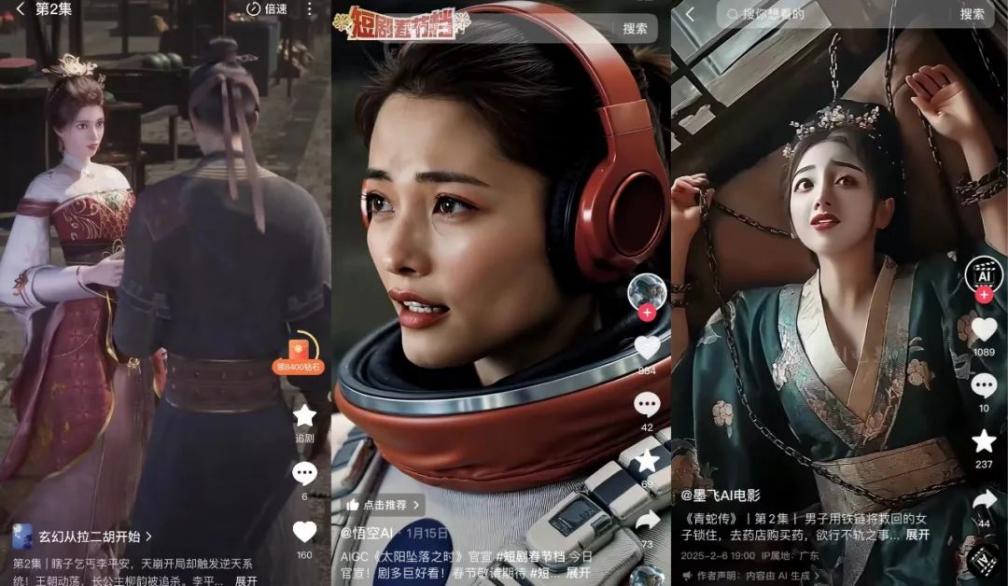
With the rapid penetration of AI technology in the film and television industry, short dramas starring AI actors have gradually become an industry hotspot. Since 2026, the proportion of AI realistic short dramas in the top 100 manga dramas has soared from 7% to 38%, with the market scale expected to reach 24 billion yuan. However, behind the upsurge, controversies such as copyright infringement, empty performances, and job displacement have continued to ferment, triggering widespread discussions among the industry and the public. This controversy is not only the growing pain of technological change, but also promotes the standardized development of the industry, reflecting the integration and coexistence of AI and film and television creation.
Behind the Controversy: Three Contradictions Highlight the Shortcomings of AI Application
The controversy over short dramas starring AI actors is essentially a collision of multiple contradictions between technological application and legal ethics, artistic value, and industry ecology, mainly focusing on three aspects.
First, the hidden danger of copyright infringement is prominent, and "stitched faces" have aroused public anger. Some AI actor images are suspected of reproducing real people's features without authorization. For example, Qin Lingyue and Lin Xiyan, AI artists signed by Yaoke Media, have been accused of being highly similar to Zhai Zilu and integrating the facial features of multiple female stars such as Zhao Jinmai, respectively, and are ridiculed as "facial feature stitched monsters". The legal community has made it clear that as long as an AI image is "identifiable" and can correspond to a specific natural person, it is suspected of infringing on portrait rights. However, the boundary of current AI training data is vague, and it is difficult and costly to prove infringement, which further exacerbates the chaos.
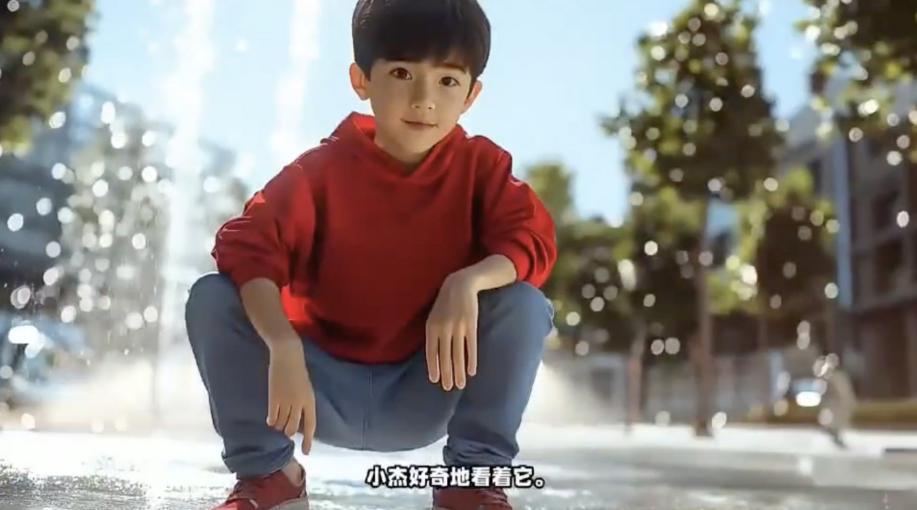
Second, the performance lacks warmth and triggers the "uncanny valley effect". Although AI can simulate millimeter-level skin texture and smooth movements, it is difficult to replicate the emotional layers and improvisation of real people. Empty eyes and disjointed emotions have become common problems. As Feng Yuanzheng said, "AI's tears are painted, while real people's tears flow from the body". This kind of performance lacking vitality seriously affects the audience's viewing experience.
Third, it squeezes the employment space and triggers industry anxiety. The advantages of AI actors, such as "zero remuneration, no schedule, and 24-hour work", make capital tend to replace supporting roles below the second male lead and extras with them, leading to a 70% sharp drop in audition opportunities for extras in Hengdian. Bottom-level actors and dubbers are the first to be affected, and the traditional promotion channel from extras to supporting roles is facing the risk of being cut off.
Joint Efforts: Supervision and Industry Linkage to Standardize Development
After the controversy fermented, regulatory authorities and industry entities took quick actions, making efforts from three dimensions: policy regulation, technical constraints, and industry self-discipline, to gradually curb the chaos and promote the compliant application of AI actors.
At the regulatory level, the principle of "filing before going online" has been clarified, and industry red lines have been drawn. The State Administration of Radio, Film and Television stipulates that since April 2026, all AI-generated short dramas must be legally filed, and existing works must be re-examined. At the same time, a three-level hierarchical review based on "investment amount + theme type" is implemented to balance supervision and creative flexibility. The Cyberspace Administration of China requires that AI-generated content be "marked as required", and short dramas must be marked with the "AI-generated" logo at the beginning to protect the audience's right to know. In addition, court cases have clarified the "identifiability" infringement standard for AI face swapping, providing a legal basis for rights protection.
At the industry level, enterprises have taken the initiative to rectify and explore compliant paths. Yaoke Media has established an AIGC laboratory, making it clear that the application of AI actors is aimed at promoting the landing of low-cost themes, rather than simply reducing costs and increasing efficiency; enterprises such as Yuxiao Media have adopted a real-person authorized modeling model, allowing real people to obtain copyright shares and avoid infringement risks. Some platforms have deployed face comparison and keyword interception mechanisms to refuse to generate images related to celebrities and strengthen content review.
In terms of results, the chaos of infringement has been initially curbed, and compliance awareness has been significantly improved. As of March 2026, most platforms have completed the re-examination of existing AI short dramas, and illegal images such as "stitched faces" have been gradually removed from the shelves; the labeling of AI actors has become the industry norm, and the audience's understanding of AI content has become clearer. At the same time, the industry has begun to abandon the "low-cost mass production" thinking and gradually transition to refinement.
Positive Turn: New Possibilities for Technology Empowering the Film and Television Industry
Although the controversy still exists, the rational application of AI actors is bringing positive changes to the short drama industry, gradually realizing the core goal of "technology serving creation", and presenting three positive statuses.
First, reducing costs and increasing efficiency, activating the creation of niche themes. AI has reduced the cost of a single short drama to 3,000-5,000 yuan, only 1% of that of real-person dramas. A 3-person team can complete 80 episodes in 5 days, allowing themes such as adventure and science fiction that were shelved due to high costs to be realized. For example, the AI short drama "Zhanxian Tai Real Person AI Version" was completed with only 100,000 yuan in computing power cost and a one-month cycle, with a playback volume exceeding 100 million in 6 days, showing the creative potential of AI.
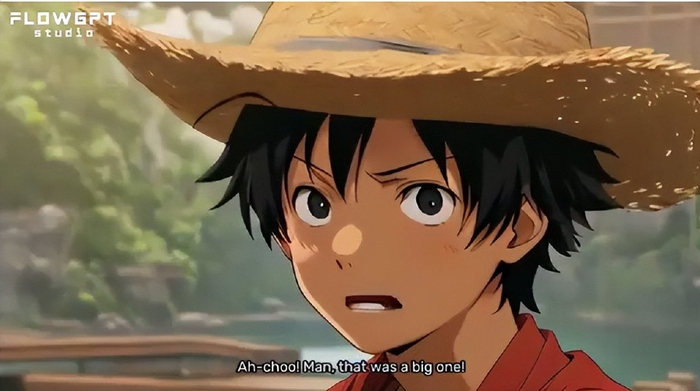
Second, technological iteration narrows the gap with real-person performances. The new generation of AI technology has achieved 0.1-millimeter-level micro-expression control, and the smoothness of movements has been greatly improved. The performances of some AI supporting roles have reached the level of "difficult to distinguish from real people without prompts". At the same time, the human-machine collaboration model has become mainstream: AI is responsible for standardized parts such as extras and high-risk scenes, while real actors focus on core emotional scenes, achieving a balance between efficiency and quality.
Third, expanding boundaries and helping cultural export. AI actors can easily cross language and cultural barriers. For example, the AI pet short drama "Cat Drama" has a playback volume exceeding 130 million on a single overseas platform, allowing Chinese content to go global in a more approachable manner. In addition, AI can replace real people to complete high-risk actions, reducing the special effects cost from 3,000 yuan per second to 3 yuan, which greatly lowers the creative threshold.
The controversy over short dramas starring AI actors is an inevitable process of technological change. At present, with the continuous improvement of supervision and the continuous iteration of technology, the industry is gradually balancing the relationship between efficiency and ethics, technology and art. In the future, as long as we adhere to the bottom line of law and respect the essence of art, AI actors will surely become an important assistant in film and television creation, promoting the high-quality development of the short drama industry.

