


Frequent Abuses During Probation Period: Resolving Laborers' Rights Protection Difficulties and Safeguarding the Bottom Line of Workplace Fairness
The probation period is originally a "running-in period" for two-way selection between employers and laborers, with the legislative purpose of balancing the rights and interests of both parties and stabilizing labor relations. However, in reality, frequent abuses such as "free-riding" on labor during probation, arbitrary dismissal, and delayed wage payment are common. Many laborers fall into the predicament of "difficulty in providing evidence, high cost, and slow progress" when their rights and interests are infringed. Data from the Ministry of Human Resources and Social Security in 2025 shows that 32.6% of labor dispute cases nationwide involve the probation period, of which 68% are illegal probation agreements by employers. The probation period has become a "high-risk area" for labor rights violations, which urgently requires attention and rectification from all sectors of society.

Prominent Abuses: Three Typical Manifestations of Probation Rights Protection Disputes
Current probation rights protection disputes mainly focus on three aspects, which directly infringe on laborers' rights and interests and damage workplace fairness. First, "free-riding" during probation has become a hidden tactic. Some enterprises blur the legal boundary in the name of "probationary training period" or "internship period", requiring laborers to work without pay, and even dismissing them on the ground of "not meeting the employment criteria" after they complete core work tasks, thus occupying labor achievements free of charge. Second, arbitrary dismissal is prevalent. Some enterprises regard the probation period as an "immunity period", without clarifying assessment standards, and dismiss employees on the basis of subjective judgment such as "insufficient ability", and even adopt "monthly turnover" employment to reduce costs. Third, delayed wage payment occurs from time to time. Some enterprises deduct or delay probation wages on the grounds of "failure to pass the assessment", and even illegally agree on wages lower than the local minimum wage standard.

In-depth Analysis: Causes and Multiple Impacts of Difficulties in Probation Rights Protection
The frequent occurrence of probation abuses and the difficulty in rights protection are caused by the lack of joint efforts among enterprises, laborers and supervision departments. At the enterprise level, some enterprises, especially small and medium-sized ones, have weak legal awareness, one-sidedly pursue the minimization of labor costs, intentionally violate regulations with low illegal costs, and often blur assessment standards and fail to sign written labor contracts, laying hidden dangers for rights infringement. At the laborer level, most people lack knowledge of labor laws and choose to compromise in the face of violations; some dare not defend their rights due to employment pressure, and face great difficulty in providing evidence, lacking key evidence to support their claims. At the supervision level, labor supervision departments mostly adopt a "no complaint, no investigation" model, with insufficient initiative in investigating illegal probation behaviors of enterprises; the rise of new forms of employment has made platform enterprises evade probation regulations in the name of "crowdsourcing" or "contracting", further increasing supervision difficulties.
These abuses have far-reaching harms: for laborers, they cause economic losses and damage career confidence; for enterprises, they damage corporate reputation, intensify personnel turnover and affect efficiency; for society, they exacerbate labor-capital conflicts, damage employment fairness, erode the healthy development of the labor market, and are not conducive to social stability.
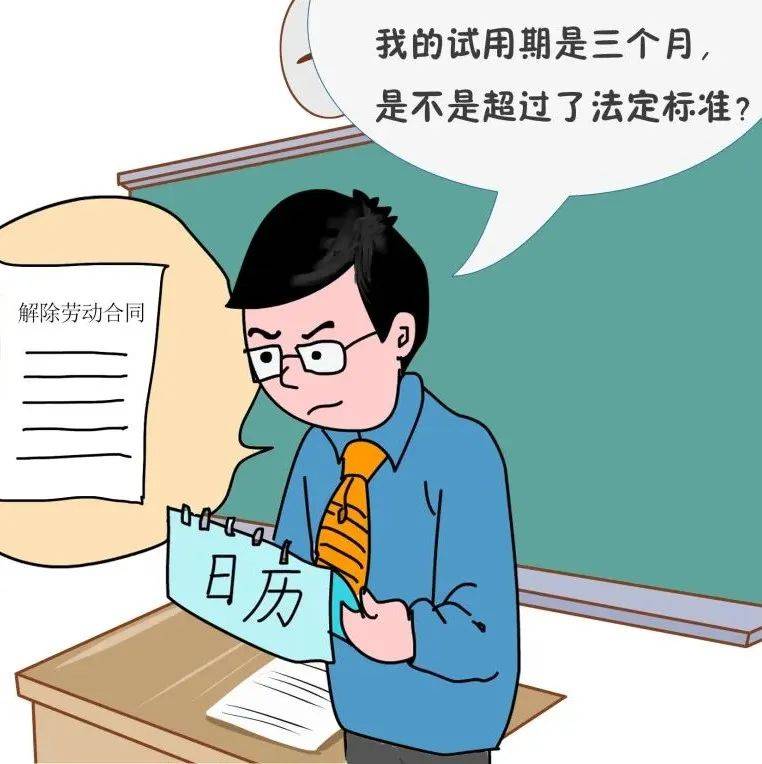
Joint Efforts: Specific Measures to Resolve Difficulties in Probation Rights Protection
Resolving the difficulties in probation rights protection requires joint efforts from the government, enterprises and laborers. First, strengthen supervision and increase the cost of illegal acts. Relevant departments should strengthen the popularization of labor laws and compliance guidance for enterprises, increase the intensity of investigation and punishment of violations, establish a blacklist of dishonest enterprise employment, simplify the rights protection process, and establish a small-sum labor dispute quick arbitration mechanism to reduce the time and economic costs of laborers' rights protection.
Second, standardize enterprise employment and consolidate the main responsibility of enterprises. Enterprises must strictly abide by the Labor Contract Law, clarify the probation period, wage standards and assessment rules, sign written labor contracts and inform laborers of employment criteria; improve the assessment process, eliminate subjective dismissal, and new forms of employment shall not evade probation regulations.
Finally, improve laborers' ability to protect their rights. Laborers should take the initiative to learn labor laws, clarify agreements and require signing contracts before employment, and retain evidence during work; when their rights and interests are infringed, they should dare to complain and apply for labor arbitration. Trade unions should play a bridge role, provide rights protection guidance and legal assistance for laborers, and help them safeguard their legitimate rights and interests.

Positive Trend: Continuous Optimization of the Probation Employment Environment
With the strengthening of supervision, improvement of laws and enhancement of social awareness, the probation employment environment is continuously improving. In 2024, the Guidelines for the Protection of Rights and Interests of Laborers in New Forms of Employment included online car-hailing drivers, food delivery riders and other groups in the protection scope, clarifying that new forms of employment are also applicable to probation regulations; many places have issued relevant policies to force the filing of electronic labor contracts, standardizing enterprise employment behaviors. Labor supervision departments have increased the intensity of active investigation, and online rights protection channels have become smooth. Data in 2025 shows that the success rate of probation rights protection complaints by laborers has reached 83.2%.
In addition, enterprises' employment concepts are gradually changing. More and more enterprises take the initiative to standardize employment and protect laborers' rights and interests; laborers' awareness of rights protection has increased, forming a good atmosphere of "enterprise compliance and laborers' legal rights protection".
The probation period is not a tool for enterprises to "free-ride" on labor, nor a "vacuum period" for laborers' rights and interests. Only through joint efforts of all parties can we curb abuses, resolve rights protection difficulties, let the probation period return to its essence of two-way selection, safeguard laborers' rights and interests, build harmonious labor relations, and promote the healthy development of the labor market.

